Real-time AI-curated news from 93,387+ articles across 50+ sources. Sentiment analysis, importance scoring, and key takeaways — updated every 15 minutes.
CryptoBullishCrypto Briefing · Jun 117/10
⛓️DBS Bank is launching tokenized physical gold through its digibank app, making precious metal investments more accessible to retail investors. This move represents a significant intersection of traditional banking, blockchain technology, and consumer finance that could accelerate mainstream adoption of tokenized assets.
GeneralBearishCrypto Briefing · Jun 11🔥 8/10
📰Escalating military tensions between the US and Iran threaten to destabilize the Middle East and undermine diplomatic efforts to maintain a fragile ceasefire. The cycle of retaliatory attacks increases the risk of wider regional conflict with potential global economic consequences.
CryptoBearishcrypto.news · Jun 117/10
⛓️Delaware and New Jersey are advancing legislation to ban cryptocurrency ATMs as FBI data reveals $388 million in fraud losses tied to crypto kiosk scams in 2025. The crackdown reflects growing regulatory concern over ATMs' role in facilitating unauthorized transactions and scams targeting consumers.
DeFiBullishCrypto Briefing · Jun 117/10
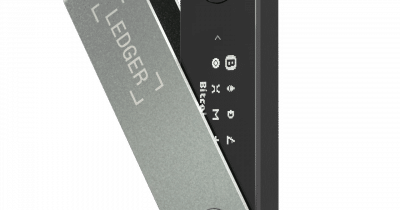
💎Ondo Finance has integrated with Ledger wallets to enable native swaps for over 260 tokenized stocks, potentially disrupting traditional equity market access by allowing direct trading through crypto wallets. This integration combines decentralized finance infrastructure with regulated tokenized securities, lowering barriers to global equity participation.
GeneralBearishCrypto Briefing · Jun 11🔥 8/10
📰US-Iran military escalations have triggered a sharp oil price spike exceeding $1 per barrel, creating volatility across global markets including cryptocurrency assets. The geopolitical tension exposes fragility in energy supply chains and reinforces cryptocurrency's emerging role in circumventing sanctions and providing financial transparency during international conflicts.
GeneralNeutralCrypto Briefing · Jun 117/10
📰The US Department of Justice has moved to dismiss its criminal case against Turkish state-owned bank Halkbank following a deferred prosecution agreement, signaling a potential relaxation in US sanctions enforcement against foreign financial institutions. This development could reshape compliance expectations for international banks and state-owned entities operating in the global financial system.
AIBearishTechCrunch – AI · Jun 117/10
🧠Opendoor's exit from India signals growing tensions around AI-driven outsourcing as the country becomes the world's largest Global Capability Center (GCC) market. The move reflects broader concerns about how artificial intelligence is reshaping global labor dynamics and the future viability of traditional business process outsourcing models.
CryptoBullishNewsBTC · Jun 117/10
⛓️On-chain analysis reveals that Bitcoin whales aggressively accumulated over 11,400 BTC during the $60K-$61K price bottom while retail investors panicked and sold, subsequently moving these coins to cold storage to remove them from liquid circulation. This wealth transfer from weak to strong hands validates the $60K-$61K range as a genuine institutional support zone, though Bitcoin currently trades below key moving averages with fragile technical structure.
$BTC$XRP🧠 ChatGPT
AIBullisharXiv – CS AI · Jun 117/10
🧠Researchers introduced Runtime Skill Audit (RSA), a dynamic analysis method that detects malicious behavior in LLM agent skills by testing them under targeted runtime conditions rather than relying on static code review. RSA achieved 90% accuracy in identifying harmful skills and maintained effectiveness against evolving attacks where static methods failed, addressing a critical security gap in agent-based AI systems.
AIBullisharXiv – CS AI · Jun 117/10
🧠LUCID is a machine learning framework that learns robot manipulation skills from unstructured internet videos and human demonstrations, then transfers this knowledge to different robot embodiments through a shared intent model. The approach eliminates the need for expensive, embodiment-specific robot training data and demonstrates zero-shot transfer capabilities across multiple real-world tasks.
AIBullisharXiv – CS AI · Jun 117/10
🧠A research paper proposes synergistic AI systems that combine Large Language Models with graph computation and knowledge graphs to overcome LLMs' limitations in structured reasoning and multi-hop inference. The work outlines three complementary approaches: augmenting LLMs with graph computation, bidirectional integration between LLMs and knowledge graphs, and strengthening AI agents with graph algorithms for complex decision-making.
AIBullisharXiv – CS AI · Jun 117/10
🧠Researchers present a novel compression technique for speech foundation models using parameter clustering and k-means pruning without requiring training data or fine-tuning. The method demonstrates significant performance improvements over traditional magnitude-based pruning on HuBERT-large and Whisper-large-v3, with 27-59% relative WER reductions at various sparsity levels.
AIBullisharXiv – CS AI · Jun 117/10
🧠Researchers introduce ISE (Intent → Simulate → Execute), a three-stage framework for training OS agents that generates 43,956 structured intents and 23,132 multi-turn trajectories with live execution validation. Fine-tuning Qwen3-8B on this dataset achieves 37.7% pass@1 on ClawEval, outperforming GPT-4o zero-shot and the larger Qwen3-32B model, demonstrating that high-quality synthetic data design can overcome model scale limitations.
🧠 GPT-4
AIBullisharXiv – CS AI · Jun 117/10
🧠Researchers have developed a physics-informed neural network framework that uses Large Language Models to extract scientific knowledge from literature, enabling accurate manufacturing predictions with minimal data. The lightweight student model achieves real-time inference speeds exceeding 6000 Hz while maintaining robust performance even when LLM-derived physics priors are incomplete.
AIBearisharXiv – CS AI · Jun 117/10
🧠AI researchers are called upon to lead arms control efforts to mitigate risks from military AI applications, as defense contractors increasingly integrate advanced AI into weapons systems. The paper argues that technical experts must collaborate with diplomacy specialists and military leaders, drawing lessons from nuclear deterrence frameworks to develop verification and security standards for frontier AI models deployed in defense contexts.
AINeutralarXiv – CS AI · Jun 117/10
🧠Researchers tested whether LLM-based coding agents like Claude and Codex introduce bias or reduce methodological diversity in scientific analysis. The study found agents match or exceed human methodological diversity at the design layer, but remain vulnerable to manipulation at the verdict/interpretation layer, where explicit prompts can flip conclusions without changing underlying estimates.
🧠 Claude
AINeutralarXiv – CS AI · Jun 117/10
🧠Researchers discover that when language models roleplay historical figures with different belief systems, they primarily change their outputs rather than their internal representations of truth. The study contrasts this with Emergent Misalignment, where models trained on harmful content actually internalize false beliefs, suggesting different degrees of belief internalization exist across model behaviors.
🧠 Llama
AIBullisharXiv – CS AI · Jun 117/10
🧠Researchers developed an attention-enhanced machine learning framework using ordinal regression to automate Alzheimer's disease severity staging by integrating MRI scans with clinical and genetic data. The multimodal ordinal model achieved 97% adjacent-stage accuracy and stronger agreement with clinical assessments than existing approaches, offering a scalable tool for neurodegenerative disease diagnosis.
AIBullisharXiv – CS AI · Jun 117/10
🧠Researchers introduce SirenFNO, a neural network framework that improves Fourier Neural Operators by eliminating frequency truncation limitations and enabling full-spectrum learning. The approach achieves 4-15x parameter reduction while maintaining discretization invariance, with functional decomposition variants reaching up to 73x fewer parameters across multiple PDE benchmarks.
AINeutralarXiv – CS AI · Jun 117/10
🧠Researchers introduce MPC-Patch-Bench, the first repository-level benchmark for evaluating LLM code repair in Secure Multi-Party Computation systems. The benchmark reveals that current LLMs achieve only 22.9% functional resolution on MPC tasks, dropping to 17.1% when security and numerical-fidelity constraints are applied, highlighting significant gaps in AI's ability to handle cryptographically-sensitive code.
AIBearisharXiv – CS AI · Jun 117/10
🧠JailbreakOPT is a new framework that optimizes adversarial prompts to exploit safety vulnerabilities in large language models through iterative refinement and tool composition. The approach combines atomic jailbreak techniques with contextual bandits to achieve higher attack success rates while reducing the number of queries needed, demonstrating meaningful progress in LLM security testing.
AIBullisharXiv – CS AI · Jun 117/10
🧠Researchers introduce Autopilot, an execution framework for long-horizon LLM agents that prevents false success claims through a verifiable finite-state machine architecture. Testing across 3,150 cases shows Autopilot reduces fabrication rates to 0.95% compared to 8.10% and 25.05% for competing systems, with dramatic improvements on complex software engineering benchmarks.
AIBullisharXiv – CS AI · Jun 117/10
🧠FlowBank presents a novel framework for optimizing LLM-based multi-agent systems by building a portfolio of complementary workflows rather than searching for a single universal solution or regenerating workflows per query. The approach balances computational efficiency with performance, achieving 4-14% improvements over existing methods while reducing inference costs.
AIBearisharXiv – CS AI · Jun 117/10
🧠Researchers quantified how undesirable behaviors transfer from teacher to student language models during distillation, even when trained only on benign data. Testing Llama-2 and Qwen2.5 models with varying steering strengths revealed different vulnerability profiles: Llama-2 showed a sharp behavioral transfer threshold, while Qwen2.5 exhibited continuous, higher-rate transfer of unwanted characteristics.
🧠 GPT-4🧠 Llama
AIBullisharXiv – CS AI · Jun 117/10
🧠TileFuse is a new kernel library that enables efficient quantized large language model inference on AMD's XDNA2 NPUs by supporting industry-standard quantization formats like AWQ directly, rather than requiring model reshaping. The technology delivers up to 2x improvements in latency and energy efficiency on edge devices, making practical LLM deployment on consumer hardware substantially more viable.