
Wiwynn warns AI infrastructure bottlenecks will persist through 2028
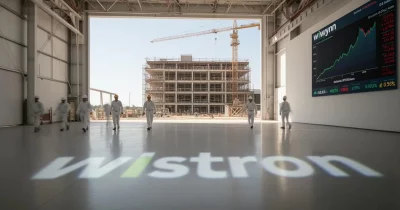
Wiwynn, a major AI infrastructure provider, projects that bottlenecks in AI hardware and computing capacity will persist through 2028, constraining tech industry growth. The warning underscores the structural challenges in scaling AI infrastructure and highlights the need for strategic investment diversification to address capacity limitations.
Wiwynn's forecast signals a critical inflection point for the AI industry's hardware constraints. The persistence of infrastructure bottlenecks through 2028 suggests that demand for AI compute capacity significantly outpaces supply expansion, creating a multi-year supply crunch that extends beyond current cycle expectations. This reflects the exponential growth in AI model training and inference demands, from large language models to enterprise deployments, while manufacturing and deployment capabilities remain constrained by semiconductor availability, data center construction timelines, and capital requirements.
The broader context reveals a structural mismatch between AI adoption velocity and infrastructure buildout. While chip manufacturers like NVIDIA have ramped production and new competitors emerge, the sheer scale of required investment—spanning semiconductors, cooling systems, power infrastructure, and data center real estate—creates inevitable delays. This situation parallels previous technology infrastructure transitions, though with higher financial barriers.
For investors and developers, persistent bottlenecks create both headwinds and opportunities. Companies with existing infrastructure access gain competitive moats, while those dependent on securing compute resources face margin pressure and delayed deployments. Cloud providers and infrastructure firms positioned to address capacity constraints benefit from sustained pricing power and demand visibility.
Market participants should monitor semiconductor supply announcements, data center construction progress, and emerging alternative compute solutions. Strategic diversification beyond NVIDIA-dependent architectures and geographic distribution of compute resources become increasingly valuable as enterprises prepare for prolonged scarcity conditions.
- →AI infrastructure bottlenecks are expected to persist through 2028, constraining industry growth and innovation timelines
- →Supply-demand imbalance in compute capacity creates sustained pricing power for infrastructure providers
- →Companies with secured compute access gain competitive advantages over those competing for limited resources
- →Strategic diversification across hardware providers, architectures, and geographic regions becomes critical for long-term planning
- →Investors should prioritize infrastructure plays and emerging compute solutions addressing capacity constraints