
Amazon unveils Vulcan, its first robot with tactile sensing for warehouses
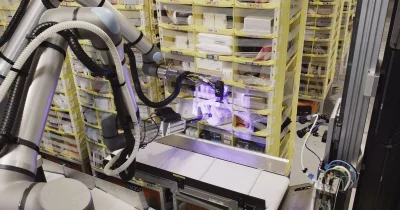
Amazon has unveiled Vulcan, a warehouse robot equipped with tactile sensing technology, marking a significant advancement in robotic automation for logistics operations. The innovation aims to improve warehouse efficiency and reduce operational costs while working alongside human employees rather than replacing them entirely.
Amazon's introduction of Vulcan represents a meaningful evolution in warehouse automation technology. Unlike previous robotic systems that relied primarily on visual recognition and pre-programmed movements, Vulcan's tactile sensing capabilities enable it to handle items with varying shapes, sizes, and fragility levels—tasks that have historically required human workers. This development matters because tactile feedback allows robots to perform delicate operations, such as handling irregularly-shaped packages or items requiring careful placement, expanding the scope of automatable warehouse tasks.
The broader context reveals Amazon's ongoing investment in robotics as part of a larger industry shift toward intelligent automation. For years, e-commerce fulfillment has been constrained by the complexity of handling diverse products; robots excelled at repetitive, standardized tasks but struggled with variability. Tactile sensing bridges this gap, leveraging advances in sensor miniaturization and AI-driven control systems that have matured over the past five years.
From a market perspective, this advancement creates ripple effects across logistics, manufacturing, and supply chain sectors. Companies competing in rapid-fulfillment services now face pressure to adopt similar technologies or risk efficiency disadvantages. For investors in robotics and automation companies, this validates the commercial viability of tactile-sensing systems, potentially accelerating capital allocation toward startups developing complementary technologies.
Looking ahead, the key metric to monitor is deployment scale—whether Vulcan becomes standard across Amazon's warehouse network within 12-24 months. Integration speed will signal market readiness and influence competitor responses, while worker displacement data will shape regulatory discussions around automation in labor-intensive industries.
- →Vulcan's tactile sensing enables handling of diverse, fragile items beyond traditional robotic capabilities
- →Amazon positions automation as complementary to human labor, addressing variability challenges in warehousing
- →Technology validates commercial viability of tactile-sensing systems in high-volume logistics operations
- →Competitors face competitive pressure to adopt similar robotic solutions or cede efficiency gains
- →Deployment timeline and labor impact metrics will determine regulatory and industry-wide adoption trajectory