
Anthropic introduces Opus 4.8 with dynamic workflow for Claude Code
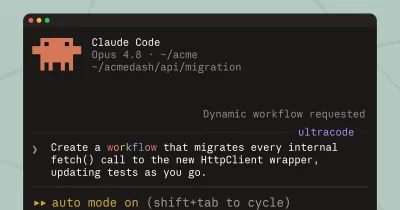
Anthropic has released Opus 4.8, an enhanced version of Claude featuring dynamic workflow capabilities for Claude Code, designed to streamline automation in large-scale enterprise coding projects. The update promises to improve software development efficiency across organizations handling complex development workloads.
Anthropic's launch of Opus 4.8 represents a meaningful evolution in enterprise AI tooling, specifically targeting software development workflows. The integration of dynamic workflow functionality within Claude Code addresses a critical gap in developer productivity—automating repetitive tasks and complex coding processes that have traditionally required significant manual oversight. This development signals Anthropic's strategic focus on positioning Claude as an essential infrastructure layer for enterprise software engineering.
The competitive landscape for AI-assisted development has intensified significantly, with multiple players including OpenAI, Google DeepMind, and Meta expanding their coding capabilities. Anthropic's emphasis on dynamic workflows suggests a differentiation strategy centered on adaptability and context-aware automation, moving beyond static code generation toward systems that can manage evolving project requirements. This positioning reflects broader industry trends where enterprises seek AI solutions that integrate seamlessly into existing development pipelines rather than requiring fundamental workflow restructuring.
For enterprise software teams, Opus 4.8 could materially impact resource allocation and project timelines, potentially reducing development cycles while lowering the expertise barrier for certain coding tasks. The platform's enhanced automation capabilities may create competitive advantages for early-adopting organizations, particularly those managing large codebases or distributed development teams. However, the actual market impact remains contingent on adoption rates and demonstrated productivity gains in production environments.
Looking forward, the integration of dynamic workflows in Claude Code will likely prompt competitive responses from rival AI providers, further accelerating the development of specialized coding-focused AI systems. Market observers should monitor adoption metrics among enterprise clients and measure reported efficiency improvements to validate the platform's claimed benefits.
- →Opus 4.8 introduces dynamic workflow capabilities to automate large-scale enterprise coding projects more effectively.
- →The update positions Claude as a competitive alternative in the growing market for AI-assisted development tools.
- →Dynamic workflows represent a shift from static code generation toward adaptive, context-aware automation systems.
- →Early adoption could provide competitive advantages for enterprises managing complex development environments.
- →The release will likely accelerate competitive innovation among rival AI providers in the coding assistance space.