
Jeff Bezos Is Funding a Wild Hunt for the Brain’s ‘Core Algorithm’
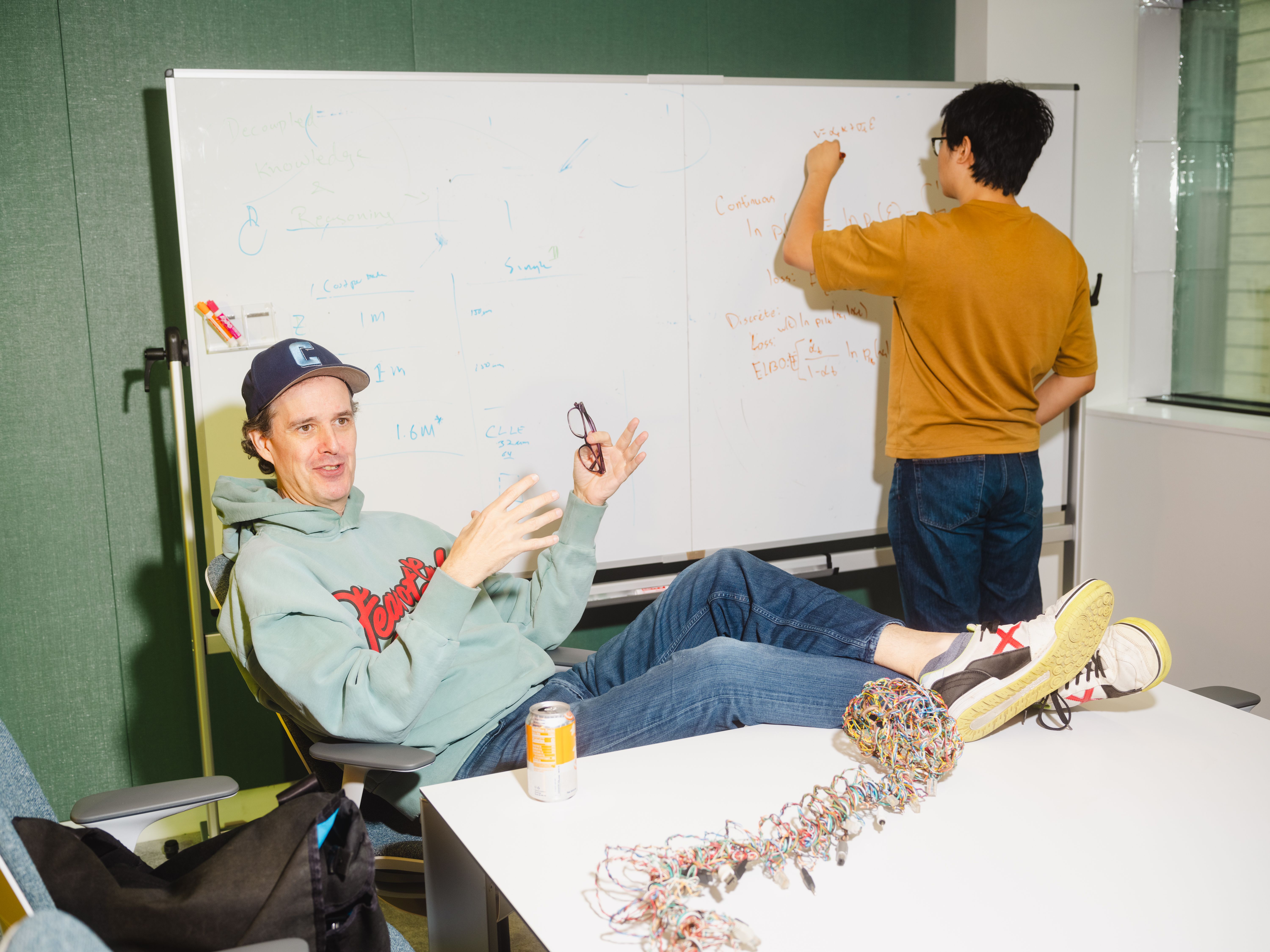
Jeff Bezos-backed Flourish has secured $500 million in funding at a $2.5 billion valuation to develop AI by studying biological neurons directly. The startup's approach represents a significant pivot from traditional deep learning toward biomimetic intelligence research.
Flourish's massive funding round signals growing investor confidence in alternative approaches to artificial intelligence development. Rather than scaling existing transformer architectures, the company aims to decode how biological neural networks actually function, potentially unlocking more efficient AI systems. This reflects a broader recognition within Silicon Valley and beyond that current deep learning methods, while impressive, may not represent the optimal path to advanced AI capabilities.
The neuroscience-first approach addresses fundamental questions about how biological brains achieve remarkable efficiency with limited energy compared to data centers running modern AI models. By putting real neurons under the microscope at scale, Flourish seeks to identify core computational principles that biological systems exploit but artificial networks have yet to replicate. This resonates with longstanding critiques that current AI is computationally wasteful despite producing capable outputs.
For the broader AI industry, this investment trend suggests capital is diversifying beyond large language models and generative AI competitors. Success here could reshape how companies architect neural networks, influencing everything from edge computing to mobile AI deployment. If Flourish identifies genuinely novel algorithmic principles, competitors would face pressure to license or independently develop similar biotechnologies.
The coming years will determine whether biological insights translate to practical AI improvements. Success requires bridging neuroscience discoveries with engineering constraints—a notoriously difficult transition. Investors should monitor whether Flourish delivers publishable findings and, crucially, whether those findings generate commercially viable AI improvements that justify the massive capital commitment.
- →Flourish raised $500 million at $2.5 billion valuation to study biological neurons for AI development
- →The approach challenges conventional deep learning by seeking to reverse-engineer brain-based algorithms
- →Investment reflects growing capital diversification away from pure language model competition
- →Success could fundamentally reshape neural network architecture across the industry if biological principles prove commercially viable
- →Execution risk remains high despite funding, as translating neuroscience insights into engineering improvements historically proves difficult