
Meet a British businessman who doesn’t regret his Brexit vote. He says rejoining the EU would be ‘re-boarding the Titanic’ while giving up life vests
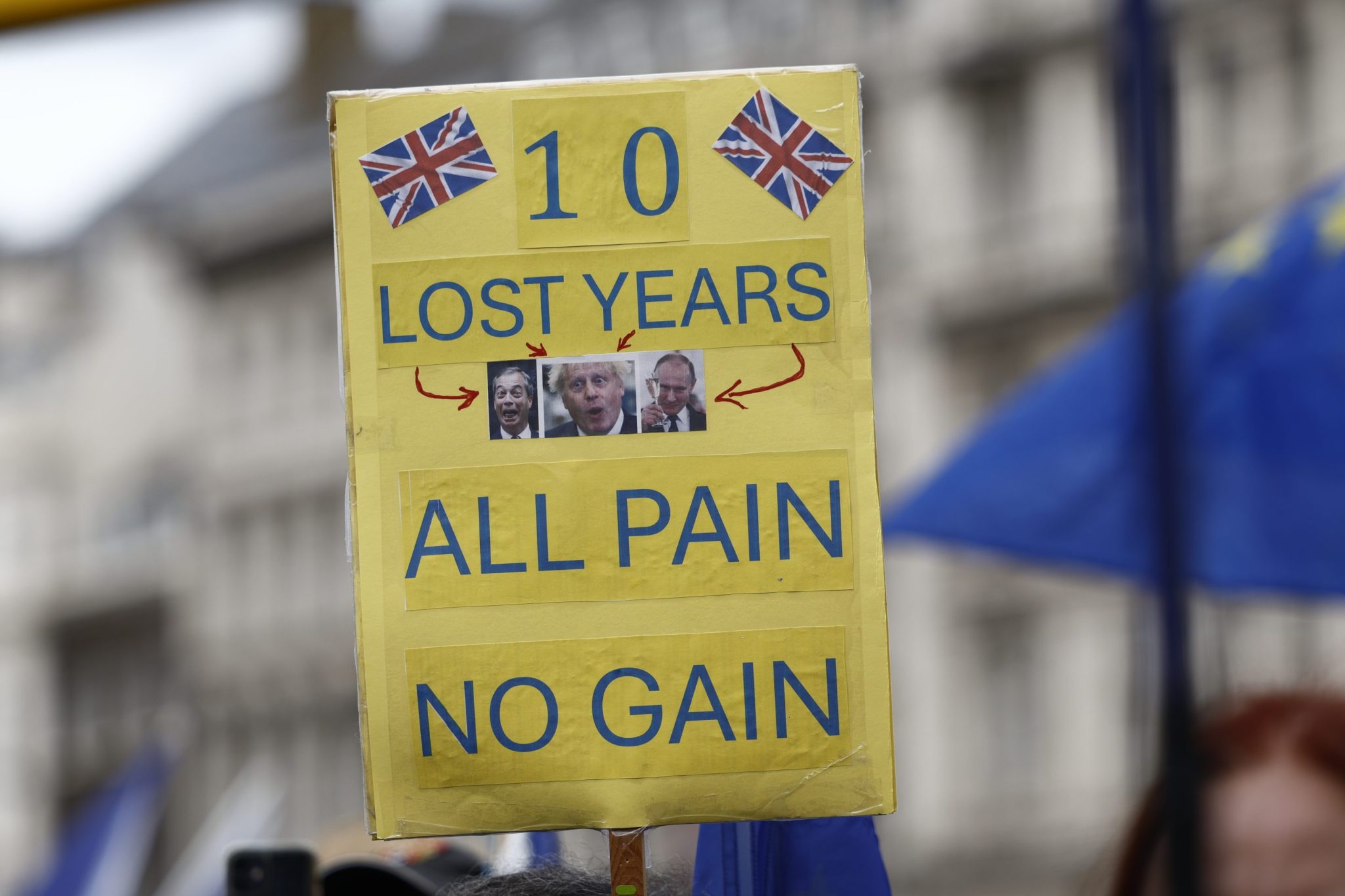
A British businessman defends his Brexit vote despite the UK's economic contraction of 8% over a decade, arguing that rejoining the EU would be worse. The article uses the Titanic metaphor to question which outcome—Brexit or potential EU re-entry—represents the greater catastrophe for Britain's economy.
The article presents a paradoxical moment in British politics where economic data contradicts pro-Brexit sentiment. A decade after the 2016 referendum, the UK's 8% GDP contraction signals substantial economic friction from the divorce with the EU, yet some Brexit supporters remain convinced of their original position. This reflects a deeper pattern in democratic discourse: voters compartmentalize contradictory information, anchoring to identity-based political decisions rather than outcome-based evaluation. The businessman's 're-boarding the Titanic' metaphor inverts typical economic criticism, framing EU membership as the sinking ship rather than Brexit itself. This rhetorical strategy is psychologically revealing—it suggests some voters view political sovereignty as more valuable than measurable economic gains, a priority that transcends conventional cost-benefit analysis. The context of a departing prime minister adds institutional instability to the equation, further complicating the Brexit narrative. For observers of macroeconomic policy, this exemplifies how political decisions with substantial economic consequences often resist rational revision, even when empirical evidence mounts against the original choice. The article's implicit question—which represents the true disaster—highlights how the same metaphor can be claimed by opposing sides of a debate, each convinced their interpretation reflects reality. This pattern has implications beyond Brexit, suggesting that major structural economic decisions may generate sustained political defensiveness regardless of measurable outcomes, potentially delaying corrective policy shifts.
- →UK GDP has contracted 8% in the decade since Brexit, yet some original voters still defend their position.
- →Pro-Brexit voices frame EU rejoining as worse than Brexit itself, despite economic headwinds.
- →Political identity and sovereignty concerns can override economic data in voter decision-making.
- →Prime ministerial turnover coincides with continued economic underperformance, creating policy uncertainty.
- →The Titanic metaphor becomes contested territory between pro- and anti-Brexit advocates with competing narratives.