
CFPB orders all staff back to Washington as Trump administration tightens grip on consumer watchdog
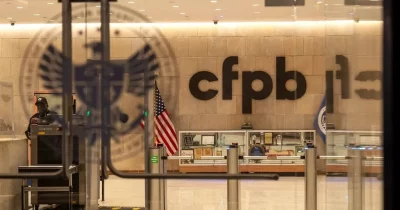
The Trump administration has ordered all Consumer Financial Protection Bureau (CFPB) staff to return to Washington headquarters, centralizing operations and tightening executive control over the agency. This consolidation may weaken the agency's distributed oversight capabilities, potentially creating a fragmented compliance landscape as regulatory authority shifts toward state-level regulators.
The CFPB's staff recall represents a significant shift in how consumer financial regulation operates at the federal level. By consolidating operations in Washington, the administration appears to be reasserting direct executive control over an agency designed with structural independence. This centralization carries substantive implications for how financial services—including cryptocurrency platforms and fintech companies—navigate regulatory requirements. A weakened or less effective CFPB could create regulatory gaps that state authorities rush to fill, producing a patchwork of inconsistent state-level rules rather than cohesive federal oversight. The crypto and fintech sectors have already experienced regulatory complexity from state-by-state licensing requirements; further fragmentation compounds compliance burdens and operational costs. Decentralized operations historically allowed CFPB regional offices to tailor oversight to local market conditions and enforce rules more effectively through distributed resources. Centralizing staff reduces on-the-ground regulatory presence in key financial centers and tech hubs where innovation occurs. For investors and platform operators, this shift signals potential near-term regulatory unpredictability. Companies cannot reliably predict enforcement priorities when institutional structures are in flux. However, some market participants may view weakened federal oversight as creating opportunities for less-regulated business models, at least temporarily. The transition period will likely see regulatory vacuum periods where certain activities face unclear jurisdiction. Stakeholders should monitor state-level regulatory responses, as progressive states may implement stricter consumer protections to fill federal gaps, creating new compliance obligations.
- →CFPB centralization in Washington reduces distributed regulatory oversight capacity and on-the-ground enforcement presence
- →Weakened federal oversight likely triggers compensatory state-level regulation, creating fragmented compliance requirements across jurisdictions
- →Crypto platforms and fintech companies face increased regulatory uncertainty during the institutional transition period
- →The shift may incentivize companies to focus on states with lighter regulatory touch while avoiding stricter state jurisdictions
- →Watch for coordinated state-level consumer protection initiatives as the primary regulatory response to reduced federal capacity