
China finance ministry bars procurement from 46 US firms
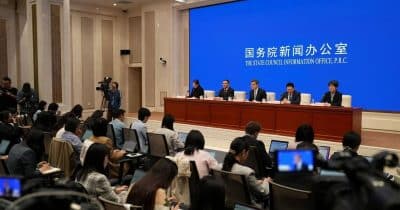
China's finance ministry has banned procurement from 46 US firms, escalating trade tensions between the two economic superpowers. This action intensifies existing tariff disputes and threatens to accelerate supply chain fragmentation, with potential ripple effects across global markets including cryptocurrency and technology sectors.
China's procurement ban targeting 46 American companies represents a significant escalation in the ongoing US-China trade conflict. This retaliatory measure signals Beijing's willingness to weaponize government purchasing power as a negotiating tool, moving beyond traditional tariff mechanisms into institutional-level economic pressure. The ban effectively locks these firms out of Chinese government contracts and state-owned enterprise dealings, creating immediate revenue risks for affected companies.
The trade war between the US and China has intensified substantially since 2018, characterized by tit-for-tat tariffs, technology restrictions, and supply chain disruptions. This procurement ban adds a new dimension by targeting corporate relationships at the government level, suggesting both sides are abandoning diplomatic restraint. The measure reflects broader geopolitical competition over technology dominance and economic sovereignty, particularly in semiconductors and advanced manufacturing.
For cryptocurrency and blockchain markets, this development carries mixed implications. Economic decoupling between the world's two largest economies typically increases macro uncertainty, which can trigger risk-off sentiment and temporary asset price declines. However, blockchain technology often benefits from regulatory fragmentation and capital controls, as investors seek alternative financial channels. The 46 affected firms may include technology and financial services companies whose restrictions could indirectly support decentralized finance adoption.
Looking ahead, market participants should monitor whether the US retaliates with additional sanctions or procurement restrictions against Chinese firms. Escalation could trigger broader capital flight from Chinese assets and renewed demand for decentralized alternatives. The ban's duration and scope will determine whether this represents isolated retaliation or the beginning of systematic economic decoupling that fundamentally reshapes global trade patterns.
- →China banned 46 US firms from government procurement contracts, escalating trade war tensions.
- →Measure adds institutional-level economic pressure beyond traditional tariff mechanisms.
- →Supply chain fragmentation accelerates, increasing market uncertainty in near term.
- →Geopolitical risk may temporarily depress risk assets but could benefit blockchain alternatives.
- →Further US retaliation likely, with potential for broader economic decoupling to continue.