
China’s crude oil imports plunge to pandemic-era lows as Iran conflict chokes supply lines
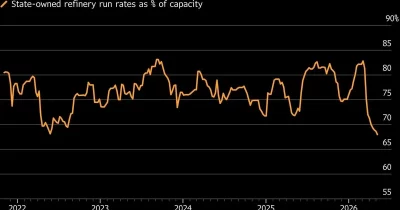
China's crude oil imports have declined to pandemic-era lows amid escalating Iran tensions that disrupt supply lines. This reduction exposes fragility in global energy supply chains, with downstream effects on refinery margins and potential shifts in international oil markets that could influence energy-dependent sectors including cryptocurrency mining operations.
China's plummeting crude oil imports signal deepening disruptions in global energy markets driven by geopolitical friction involving Iran. The nation typically relies on diverse oil sources, but regional conflict constrains supply reliability and increases procurement costs. This development reverberates through interconnected systems that extend beyond traditional energy sectors.
The Iran-related supply constraints reflect years of escalating tensions punctuated by sanctions regimes and military posturing. China's reduced import volumes suggest either deliberate purchasing caution or genuine supply unavailability. Historical precedent shows such disruptions eventually propagate into broader economic activity, affecting industries dependent on stable energy pricing.
Refinery margins face compression as reduced throughput combines with elevated input costs, weakening profitability across energy infrastructure. For cryptocurrency markets, this matters significantly: Bitcoin and Ethereum mining operations consume substantial electricity, and energy cost volatility directly impacts mining profitability and hash rate distribution. Regions with access to cheap oil-powered generation gain competitive advantage, while energy-scarce areas face margin compression.
The broader implication involves supply chain recalibration. Market participants typically respond to energy uncertainty by diversifying sourcing and hedging exposure. Cryptocurrency networks may experience hash rate migrations as miners reassess operational viability in different jurisdictions. Investors should monitor oil price movements and energy futures as leading indicators of mining profitability shifts and potential cryptocurrency market volatility stemming from energy cost pressures.
- →China's crude oil imports fall to pandemic lows due to Iran supply disruptions, indicating fragile global energy chains.
- →Refinery margins compress from reduced throughput and elevated input costs, affecting broader economic activity.
- →Cryptocurrency mining operations face margin pressure as energy costs rise and availability becomes uncertain.
- →Geopolitical supply constraints may trigger hash rate migration to energy-abundant jurisdictions with lower operating costs.
- →Energy market instability could become a leading indicator for cryptocurrency volatility and mining profitability cycles.