
Goldman Sachs links stronger dollar to reduced Treasury demand amid US-Iran conflict
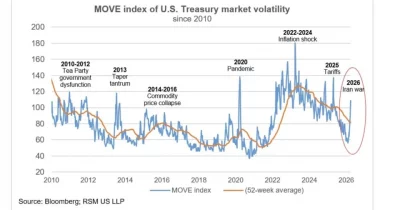
Goldman Sachs reports that foreign institutions, particularly China and Japan, reduced their Treasury holdings as the US dollar strengthened over 2% during the March 2026 US-Iran conflict. This correlation between dollar appreciation and declining foreign demand for US debt highlights the complex relationship between geopolitical risk, currency movements, and capital flows in traditional markets.
The reported Treasury sell-off by major foreign holders during the March 2026 US-Iran conflict reveals fundamental dynamics in how geopolitical tensions reshape global asset allocation. When the dollar appreciates sharply during periods of elevated risk, it typically reflects safe-haven flows into US currency. However, Goldman Sachs' analysis indicates that simultaneously, foreign institutions reduced their exposure to US government debt despite the dollar's strength—a seemingly counterintuitive move that suggests diversification concerns beyond simple currency hedging.
This behavior likely stems from several interconnected factors. China and Japan, as the largest foreign holders of US Treasuries, may have rebalanced portfolios to reduce geopolitical concentration risk or responded to potential US sanctions concerns. Higher Treasury yields that often accompany risk-off environments combined with a stronger dollar can create unfavorable conditions for foreign investors when measured in their home currencies, even if dollar-denominated returns appear stable. The 2% dollar appreciation indicates significant capital reallocation.
For cryptocurrency markets and digital asset participants, this development signals broader fragmentation in global confidence structures. Traditional Treasury demand underpins the US financial system's stability; weakening foreign demand suggests potential long-term implications for US borrowing costs and monetary policy flexibility. Crypto investors often monitor such shifts as early indicators of broader macroeconomic stress or currency debasement scenarios that historically benefit alternative assets. The geopolitical dimension adds unpredictability that may drive retail and institutional portfolios toward non-correlated assets.
- →Foreign institutions sold Treasuries amid dollar appreciation during US-Iran tensions, showing divergent safe-haven strategies
- →China and Japan reduced their US government debt holdings despite traditionally stable Treasury demand
- →A 2% dollar surge accompanied declining foreign Treasury demand, suggesting rebalancing beyond currency hedging
- →Geopolitical risk is reshaping capital flows away from traditional US debt instruments
- →Weakening Treasury demand could signal broader confidence issues relevant to cryptocurrency market dynamics