
Dubai airport sees 66% passenger drop amid Iran conflict disruptions
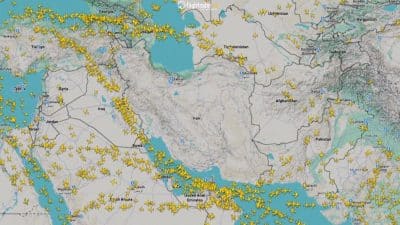
Dubai International Airport experienced a dramatic 66% drop in passenger traffic due to escalating Iran-related geopolitical tensions disrupting regional travel. The decline reflects broader economic vulnerabilities in the Middle East and highlights how conflict-driven uncertainty impacts major transportation hubs and regional commerce.
Dubai airport's 66% passenger decline represents a significant disruption to one of the world's busiest aviation hubs, signaling how geopolitical instability directly translates into economic contraction. The Iran conflict has created a risk environment that deters both leisure and business travel, with airlines reducing frequencies and travelers rerouting through alternative hubs or avoiding the region entirely.
The Middle East has long served as a critical logistics and financial corridor connecting Asia, Europe, and Africa. Dubai's position as a global trading center and financial hub depends heavily on unrestricted air connectivity and regional stability. When major transportation infrastructure experiences such sharp declines, it cascades across multiple sectors including tourism, trade finance, expatriate employment, and corporate operations. Airlines face revenue pressure while hospitality and retail sectors lose customers.
For the broader economy and cryptocurrency markets, regional disruptions matter significantly. Middle Eastern financial centers, particularly the UAE, have emerged as important cryptocurrency and blockchain hubs over the past two years. Flight disruptions and economic uncertainty can impact business confidence, venture capital allocation, and the velocity of financial transactions that often flow through regional exchanges and fintech platforms. Additionally, geopolitical risk premiums typically increase volatility across global markets, including digital assets.
Looking ahead, recovery timelines depend on de-escalation in Iran tensions and restoration of regional confidence. Extended disruption could accelerate digital finance adoption as businesses seek non-traditional transaction channels and remote operational capabilities. Monitoring passenger recovery rates at Dubai airport serves as a barometer for regional economic normalization.
- →Dubai airport saw a 66% passenger drop directly tied to Iran-related geopolitical tensions affecting regional travel confidence.
- →Major transportation hub disruptions cascade across tourism, trade, finance, and business operations throughout the Middle East.
- →Regional economic instability can impact cryptocurrency and blockchain sectors given the UAE's growing prominence in digital finance.
- →Geopolitical risk premiums increase market volatility across traditional and digital asset classes during conflict periods.
- →Passenger recovery rates at major Middle Eastern airports serve as key economic indicators for regional normalization.