
Exponent Finance launches risk-tranching for Solana DeFi and RWA yield markets
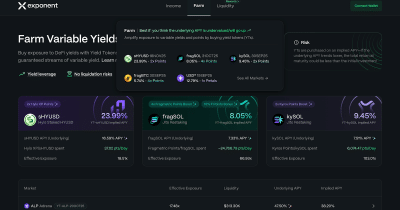
Exponent Finance has launched a risk-tranching protocol on Solana designed to segment yield-bearing assets into different risk tiers, enabling investors with varying risk appetites to participate in DeFi and real-world asset (RWA) markets. This mechanism could broaden Solana's appeal by allowing conservative and aggressive investors to coexist in the same yield markets.
Exponent Finance's risk-tranching launch addresses a fundamental challenge in DeFi: the one-size-fits-all nature of yield products that often forces investors to accept standardized risk profiles. By fragmenting yield streams into senior, mezzanine, and junior tranches, the protocol creates a structured hierarchy where conservative investors can access lower-volatility, lower-yield senior positions while aggressive participants take subordinated tiers in exchange for higher returns. This mirrors traditional finance's securitization model, bringing institutional-grade risk management to blockchain-based lending and RWA markets.
Solana's ecosystem has struggled with primitive risk infrastructure compared to Ethereum competitors. Most Solana protocols operate with binary risk exposure—users either participate fully or abstain entirely. Exponent's solution arrives as RWAs gain traction across blockchains, with institutions increasingly comfortable deploying real-world assets like tokenized bonds and commercial paper. Risk tranching becomes essential infrastructure for this growth, enabling institutional treasuries and conservative yield-seekers to participate in higher-yield opportunities without assuming unacceptable volatility.
The protocol's impact extends beyond Solana to reshape DeFi's investor composition. By lowering entry barriers for risk-averse capital, tranching mechanisms can unlock previously inaccessible liquidity pools. Insurance protocols, pension funds, and endowments might now consider Solana DeFi viable. However, execution matters critically—poorly designed tranches with misaligned incentives have caused contagion in traditional finance. Solana's speed and low fees provide operational advantages, but the protocol must maintain robust liquidation mechanisms and transparent collateral management.
Watch for adoption metrics among institutional wallets, RWA protocol integration partnerships, and whether tranching attracts meaningful TVL migration from competing chains.
- →Risk-tranching splits yield into senior, mezzanine, and junior tiers, accommodating diverse investor risk profiles in DeFi
- →Exponent Finance's launch targets both DeFi and RWA markets, addressing institutional demand for structured yield
- →The mechanism could significantly expand Solana's addressable market by attracting conservative capital previously excluded from yield farming
- →Success depends on robust liquidation design and transparent collateral management to prevent contagion risks
- →Integration with emerging RWA protocols positions Solana competitively against Ethereum-centric alternatives