
Federal Reserve stress tests show US banks could absorb $550B in losses during economic crash
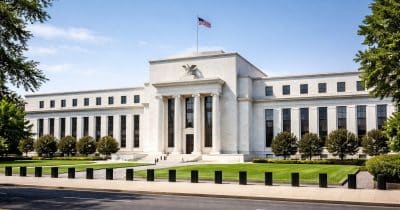
The Federal Reserve's latest stress tests demonstrate that US banks maintain sufficient capital buffers to withstand $550 billion in losses during a severe economic downturn. This positive assessment reinforces banking system resilience and may reduce market anxiety about systemic financial risks.
The Federal Reserve's stress test results represent a quantitative validation of post-2008 regulatory reforms designed to fortify the banking sector against catastrophic losses. By demonstrating that major US financial institutions can absorb half a trillion dollars in losses while maintaining adequate capital ratios, the Fed signals confidence in current prudential frameworks and capital adequacy standards. This assessment matters because banking system stability directly influences broader economic conditions and asset market performance.
These stress tests emerged from regulatory lessons learned during the 2008 financial crisis, when inadequate bank capital precipitated systemic collapse. The Fed has progressively refined testing methodologies to capture various economic scenarios—interest rate shocks, unemployment spikes, asset price declines—that would trigger significant loan losses and trading losses. The $550 billion threshold reflects the aggregate cushion across the banking system under severe stress conditions.
For markets and investors, resilient bank stress test results typically reduce perceived systemic risk premiums, potentially lowering borrowing costs and supporting equity valuations. When financial institutions appear better positioned to survive downturns, credit markets function more smoothly, benefiting both traditional and digital asset markets that depend on liquidity and institutional participation. Cryptocurrency markets particularly benefit from reduced contagion risk, as banking instability has historically triggered flight-to-safety flows that pressure risk assets.
Moving forward, regulatory attention will focus on emerging risks—commercial real estate deterioration, geopolitical shocks, AI-driven market disruptions—that future stress tests must capture. The results provide baseline confidence but require continuous monitoring as economic conditions evolve and new vulnerabilities emerge.
- →US banks can collectively absorb $550 billion in losses while maintaining regulatory capital requirements
- →Stress test results reduce perceived systemic banking risk and market stability concerns
- →Positive outcomes support continued institutional participation in credit and capital markets
- →Banking resilience strengthens overall financial system capacity to absorb economic shocks
- →Future tests will need to account for emerging risks including commercial real estate and geopolitical factors