
Foreign investors offload $62B in South Korean stocks as KOSPI drops 8%
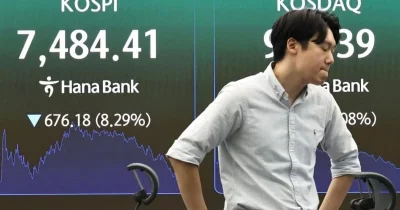
Foreign investors have offloaded $62 billion in South Korean stocks as the KOSPI index declined 8%, signaling a potential shift toward domestic ownership that could increase market volatility and test the country's economic resilience.
South Korea's equity market is experiencing a significant ownership transition as foreign investors exit positions worth $62 billion amid broader market weakness. The 8% KOSPI decline reflects investor concerns about macroeconomic conditions, geopolitical tensions, or currency fluctuations that typically trigger foreign capital flight from emerging markets. This capital exodus carries material implications for market structure and stability.
The shift from foreign to domestic ownership represents a fundamental change in market dynamics. Foreign investors typically provide liquidity and stabilizing capital flows, while domestic investors—particularly retail participants—often exhibit different risk tolerances and trading patterns. When international capital withdraws rapidly, remaining market participants face reduced liquidity and potential price discovery challenges, creating conditions for increased volatility and wider bid-ask spreads.
For South Korea's broader economy, the timing matters significantly. Large-scale foreign divestment from equities can signal reduced confidence in the nation's growth prospects or asset valuations, potentially affecting corporate financing costs and investment sentiment across sectors. The domestic investor base must absorb substantial selling pressure, which may require significant price adjustments to clear the market.
Market participants should monitor whether this represents a rotation to other asset classes or a fundamental reassessment of South Korean equities. If foreign selling accelerates or broadens to other markets like won-denominated bonds, economic policymakers may face pressure to intervene. The sustainability of this trend depends on whether domestic buying interest can stabilize valuations and whether the underlying factors driving foreign exits persist or reverse.
- →Foreign investors sold $62 billion in South Korean stocks as KOSPI fell 8%, marking a significant market ownership shift.
- →Transition from foreign to domestic ownership typically increases market volatility due to different investor behavior patterns.
- →Reduced foreign liquidity may widen spreads and create price discovery challenges in South Korean equities.
- →Large-scale foreign capital flight can signal reduced confidence in economic growth and asset valuations.
- →Domestic investor absorption capacity will determine whether this selling stabilizes or accelerates further.