
Hermes Agent’s MoA presets outperform Claude Opus 4.8 and GPT-5.5 in new benchmarks
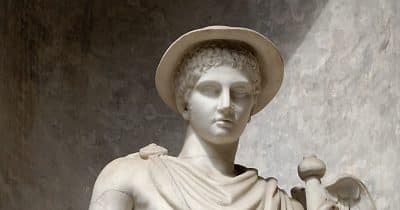
Hermes Agent's Mixture of Agents (MoA) presets have demonstrated superior performance compared to proprietary models Claude Opus 4.8 and GPT-5.5 in recent benchmarks, signaling a competitive shift toward open-source collaborative AI frameworks that challenge the dominance of closed proprietary systems.
The performance of Hermes Agent's MoA presets against leading proprietary models represents a significant inflection point in AI development. Open-source projects leveraging ensemble approaches—where multiple specialized models collaborate to solve problems—are proving competitive with single monolithic architectures from major tech companies. This development matters because it demonstrates that accessibility and collaborative innovation can produce commercially viable results without the resource concentration of proprietary vendors.
The rise of open-source AI frameworks reflects broader industry trends toward decentralization and community-driven development. MoA architecture allows developers to combine different model strengths for specialized tasks, creating flexible systems that can be customized for specific use cases. This contrasts with proprietary approaches where users accept fixed feature sets. The benchmark results validate that this modularity doesn't sacrifice performance—a critical validation for enterprises considering open-source alternatives.
For developers and organizations, these results expand viable options beyond expensive proprietary APIs. Open-source solutions offer cost advantages, customization capabilities, and the ability to maintain data sovereignty. Cryptocurrency and blockchain communities particularly benefit, as decentralized AI aligns with broader Web3 philosophies about reducing dependency on centralized tech giants. The implications extend to AI infrastructure investment and talent allocation, as developers may prioritize open-source projects that offer both competitive performance and community governance.
The trajectory suggests intensifying competition between open and closed AI models. Future benchmarks will likely emphasize real-world performance across diverse applications rather than standardized tests, potentially favoring specialized solutions that MoA frameworks can deliver. Monitoring which specific use cases drive adoption will indicate whether this represents a sustainable shift or temporary performance leadership.
- →Open-source Hermes Agent MoA presets matched or exceeded performance of Claude Opus 4.8 and GPT-5.5 in new benchmarks.
- →Mixture of Agents architecture enables collaborative model frameworks that challenge single-vendor AI dominance.
- →Open-source solutions provide cost advantages and customization benefits relevant to enterprise and Web3 applications.
- →Results validate that modularity and ensemble approaches can compete with proprietary monolithic AI architectures.
- →Competitive pressure from open-source may accelerate development of specialized AI models over generalized approaches.