
Hezbollah leader asserts victory capability amid Israeli attacks, rejects surrender
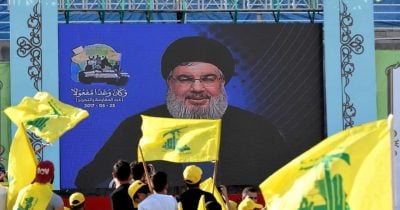
Hezbollah's leader has declared the organization's capability to achieve victory while rejecting any surrender amid ongoing Israeli military operations. The hardened stance escalates regional tensions and undermines confidence in ceasefire negotiations, creating macroeconomic uncertainty that typically pressures risk assets including cryptocurrencies.
Hezbollah's public assertion of victory capability represents a significant escalation in Middle East geopolitical tensions. The rejection of surrender signals the organization's commitment to prolonged conflict, fundamentally complicating diplomatic pathways and extending the timeline for regional stabilization. This posture directly contradicts ceasefire negotiations and indicates leadership believes it can sustain operational capacity despite Israeli military pressure.
The broader context involves years of escalating tensions between Israel and Hezbollah, with recent months marked by intensified military exchanges. The organization's refusal to capitulate suggests both sides may be entrenched in protracted conflict rather than moving toward resolution. Regional instability of this magnitude typically spills into global markets through multiple channels: energy price volatility from Middle Eastern supply concerns, flight-to-safety capital flows, and reduced risk appetite across emerging markets.
Cryptocurrency markets remain sensitive to geopolitical uncertainty due to their status as risk assets and their correlation with equity volatility. Prolonged Middle East tensions historically correlate with investors rotating toward traditional safe havens and reducing positions in volatile assets. Market confidence in ceasefire stability directly impacts appetite for risk-on positions, which includes digital assets. The uncertainty premium embedded in current pricing may expand if tensions further escalate without diplomatic breakthroughs.
Investors should monitor whether this stance triggers broader regional military escalation or remains rhetorical positioning. The critical watch point is whether international powers successfully mediate negotiations or whether the conflict enters new phases of intensity, either scenario carrying distinct implications for risk asset valuations and crypto market sentiment.
- →Hezbollah's rejection of surrender escalates Middle East tensions and diminishes near-term ceasefire prospects.
- →Geopolitical uncertainty typically reduces risk appetite and pressures volatile assets including cryptocurrencies.
- →Prolonged regional conflict introduces energy price volatility and supply chain concerns affecting global markets.
- →Market confidence in ceasefire stability directly correlates with investor sentiment toward risk-on positions.
- →Diplomatic deadlock scenarios carry greater downside risk for crypto valuations than escalation-resolution scenarios.