
Hungary halts arms to Ukraine under new prime minister Péter Magyar
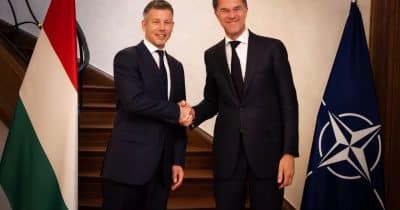
Hungary's new Prime Minister Péter Magyar has halted arms shipments to Ukraine, shifting the country's foreign policy stance. This decision reflects an effort to balance European Union tensions while maintaining domestic political support, with potential implications for NATO cohesion and Eastern European security dynamics.
Hungary's decision to suspend military aid to Ukraine under Magyar's leadership represents a significant shift in Central European geopolitics. The move reflects deeper divisions within the EU regarding Ukraine support levels, with Hungary traditionally maintaining a more cautious stance compared to Western European members. Magyar's government appears to be recalibrating Hungary's position to reduce friction with Brussels while preserving domestic political capital among constituencies skeptical of prolonged military engagement.
Historically, Hungary under Viktor Orbán adopted a relatively neutral posture on Ukraine, resisting stronger EU sanctions against Russia and limiting military contributions. Magyar's continuation and formalization of this approach through explicit halting of arms shipments signals institutional commitment to this pragmatic middle ground rather than a dramatic reversal.
The geopolitical implications extend beyond bilateral Hungary-Ukraine relations. NATO's operational effectiveness depends on member consensus, and Hungary's reduced military support contributes to fragmentation in the alliance's Eastern flank. This creates vulnerabilities that could be exploited and complicates coordinated defense strategies, particularly for bordering nations like Poland and Romania.
Investors monitoring European stability and defense spending should note that defense contractors targeting NATO members may face unpredictable demand patterns. Cryptocurrency markets sensitive to geopolitical risk premiums could experience volatility spikes if NATO cohesion deteriorates further. The broader trend suggests increased bifurcation within European institutions, potentially affecting EU-denominated asset valuations and regulatory predictability in member states.
- →Hungary halts military aid to Ukraine, maintaining its traditionally cautious geopolitical positioning under new leadership
- →The decision prioritizes reducing EU tensions while preserving domestic political support in Hungary
- →NATO cohesion faces pressure as member states adopt divergent Ukraine support policies
- →Defense contractors may experience unpredictable procurement patterns across European member states
- →Geopolitical risk premiums could influence cryptocurrency and European asset valuations