
Iran airspace closure risk rises amid ongoing conflict, disrupts travel, energy markets
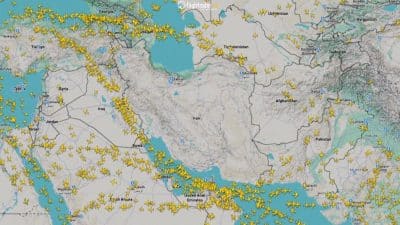
Escalating geopolitical tensions in Iran risk closing its airspace, potentially disrupting global aviation routes and energy markets. Such closure would increase travel costs, redirect shipping lanes, and create volatility in oil prices, with ripple effects across cryptocurrency and broader financial markets.
Airspace closures in strategically critical regions carry outsized consequences for global commerce and energy security. Iran's airspace represents a crucial transit corridor connecting Europe, Asia, and the Middle East; its restriction forces airlines to reroute flights, increasing fuel consumption and operational costs that eventually reach consumers and businesses. This geopolitical friction matters because energy markets—particularly crude oil—respond sharply to supply chain uncertainty, and oil price volatility historically correlates with cryptocurrency market swings.
The broader context involves decades of Iran-related geopolitical tensions exacerbated by regional conflicts. Previous airspace closures and sanctions have demonstrated how political instability in energy-producing regions creates market-wide uncertainty that extends beyond traditional commodities into risk assets like crypto. Investors use Bitcoin and other cryptocurrencies partly as hedges against macroeconomic instability, making geopolitical crises relevant to digital asset valuations.
For traders and market participants, escalating airspace closure risks increase volatility across multiple asset classes. Energy prices typically spike during such events, which can trigger cascading effects: higher transportation costs reduce corporate margins, central banks reassess monetary policy, and investors reallocate capital toward safe-haven assets. Cryptocurrency markets, sensitive to macro uncertainty and risk sentiment shifts, may see increased trading activity as investors rebalance portfolios.
Watching developments requires monitoring official announcements from aviation authorities, oil price movements, and broader geopolitical statements. Sustained closure scenarios could materially impact global supply chains and inflation expectations, factors that indirectly influence crypto market dynamics through macroeconomic transmission mechanisms.
- →Iran airspace closure would redirect major aviation routes, increasing operational costs for airlines and shipping companies globally.
- →Energy market disruption from geopolitical tensions historically correlates with cryptocurrency volatility and investor risk-off sentiment.
- →Extended airspace restrictions could trigger inflation concerns and central bank policy responses affecting macro asset allocation.
- →Cryptocurrency markets may experience increased volatility as traders hedge against geopolitical uncertainty through digital assets.
- →Monitoring aviation authority announcements and oil price movements serves as early indicators for broader macro market impacts.