
UAE condemns Iranian attacks on Bahrain, Kuwait, and Jordan as crypto markets lose $700M in hours
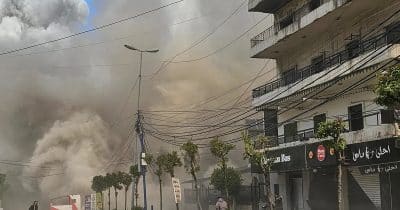
Geopolitical tensions in the Middle East, following UAE condemnation of Iranian attacks on Bahrain, Kuwait, and Jordan, triggered immediate crypto market volatility resulting in $700M in liquidations within hours. The incident demonstrates how regional conflicts directly impact cryptocurrency investor sentiment and market stability, with potential spillover effects on central bank policies amid persistent inflation concerns.
The cryptocurrency market's $700M liquidation following Middle Eastern geopolitical escalation reveals the asset class's sensitivity to macroeconomic and geopolitical shocks. When regional tensions spike, risk-averse investors typically flee volatile assets like crypto, triggering cascading liquidations across leveraged positions. This pattern has become increasingly predictable as institutional participation in crypto markets grows, amplifying correlation with traditional macro risk events.
Historically, cryptocurrency has positioned itself as a hedge against geopolitical uncertainty and currency devaluation. However, recent market behavior contradicts this narrative. Instead of flowing into crypto as a safe haven during Middle Eastern tensions, capital moves toward traditional haven assets like the US dollar and Treasury bonds. This shift reflects evolving market structure where crypto now trades more like a risk-on asset class than a hedge, particularly when leverage is involved.
The broader context matters significantly. Central banks globally remain focused on inflation control, constraining monetary policy flexibility. Geopolitical escalation adds uncertainty to growth forecasts, potentially complicating inflation trajectories. This environment creates conflicting signals for markets: recession fears suppress risk appetite while inflation persistence supports defensive positioning. Cryptocurrency, lacking intrinsic yield or cash flow, suffers disproportionately in such scenarios.
Investors should monitor escalation metrics and central bank communications closely. If geopolitical tensions persist or expand, expect continued volatility and potential further liquidations. Conversely, de-escalation could restore risk appetite. The critical variable ahead is whether this incident remains isolated or evolves into sustained regional conflict affecting oil markets and global supply chains.
- →Cryptocurrency markets liquidated $700M within hours following Middle Eastern geopolitical tensions, demonstrating acute vulnerability to macro shocks.
- →Crypto no longer functions as a reliable safe-haven asset during geopolitical crises, instead trading as risk-on and correlating with broader market downturns.
- →Regional conflicts create dual headwinds for crypto: immediate risk-off sentiment plus longer-term uncertainty affecting central bank inflation policy decisions.
- →Leveraged positions amplify volatility during geopolitical events, with cascade liquidations compressing prices faster than fundamental analysis could justify.
- →Investors should monitor geopolitical escalation indicators and central bank communications as dual catalysts for future crypto market volatility.