
Iran’s Strait of Hormuz closure sends ship traffic plummeting, rattles oil and crypto markets
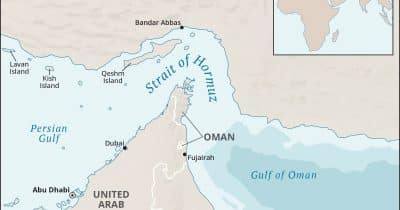
Iran's closure of the Strait of Hormuz has significantly disrupted global ship traffic, triggering volatility in oil markets and renewed attention to cryptocurrency's role in geopolitical and economic resilience. The incident underscores how regional tensions directly impact energy prices and financial markets, including digital assets.
The Strait of Hormuz closure represents a critical juncture where traditional geopolitical risk now intersects with cryptocurrency markets. As one of the world's most strategically important waterways, responsible for roughly one-third of global seaborne oil trade, any disruption to shipping through this chokepoint reverberates across energy prices and broader economic stability. The immediate impact manifests in elevated oil volatility, which historically correlates with flight-to-safety dynamics in financial markets, including crypto assets.
This incident emerges within a longer pattern of using economic tools as extensions of statecraft. Iran has previously leveraged sanctions and trade restrictions to advance geopolitical objectives, and maritime closures represent a direct mechanism to constrain global commerce. The escalation reflects deepening regional tensions and demonstrates how supply-chain vulnerabilities remain exploitable leverage points in international relations.
Market participants face elevated uncertainty across commodities and equities, conditions that typically drive institutional interest in uncorrelated assets like Bitcoin and Ethereum. Energy-intensive sectors experience margin pressure, while traders reassess inflation expectations tied to oil prices. Cryptocurrency markets may experience inflows as investors hedge against currency debasement risks accompanying economic disruption, though the relationship remains inconsistent.
Looking forward, the duration of the closure becomes critical to market outcomes. Sustained disruption could prompt strategic petroleum reserve releases and accelerate renewable energy investments. Regulatory responses may also shift, particularly regarding sanctions mechanisms and their effectiveness, potentially influencing how digital assets function within sanctioned-economy frameworks.
- →Strait of Hormuz closure disrupts approximately one-third of global seaborne oil trade, creating immediate energy market volatility.
- →Geopolitical tensions increasingly drive crypto market behavior as investors seek uncorrelated hedges against economic uncertainty.
- →Regional conflicts now directly impact multiple asset classes simultaneously, including traditional commodities and digital currencies.
- →The incident demonstrates how maritime chokepoints remain critical leverage points in international economic relations.
- →Sustained supply disruptions may accelerate institutional adoption of alternative hedging mechanisms, including cryptocurrency portfolios.