
Iran’s Revolutionary Guards establish covert Iraqi cells for drone attacks on Gulf neighbors
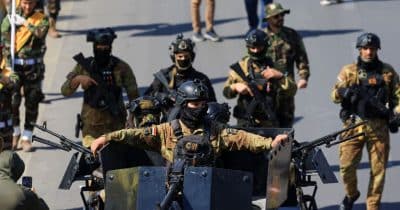
Iran's Revolutionary Guards have established covert drone cells in Iraq aimed at conducting attacks against Gulf neighbors, escalating regional military tensions. This development threatens regional stability and could disrupt global energy markets, which carry significant implications for cryptocurrency and broader financial markets sensitive to geopolitical risk.
Iran's expansion of military infrastructure through covert Iraqi cells represents a significant escalation in regional power dynamics. The establishment of drone attack capabilities positioned in Iraq allows Iran to project power across the Gulf while maintaining plausible deniability, complicating diplomatic resolution and increasing the risk of miscalculation among regional actors. This military posturing reflects deeper tensions between Iran and Gulf Cooperation Council states, particularly Saudi Arabia and the UAE, rooted in competing regional influence and sectarian rivalries.
Historically, Iran has utilized proxy forces and unconventional warfare tactics to advance strategic interests while avoiding direct confrontation with more militarily capable adversaries. The Iraqi theater provides strategic depth and proximity to Gulf shipping lanes, making it an ideal staging ground for drone operations. This pattern accelerates amid broader Middle Eastern realignment following US military withdrawals and shifting great power competition.
For cryptocurrency and financial markets, geopolitical instability in the Persian Gulf directly impacts energy prices through Strait of Hormuz shipping concerns, with oil volatility traditionally correlating with risk-asset volatility including crypto. Energy price spikes reduce consumer spending power and increase stagflation concerns, pressuring risk assets. Additionally, potential US military response or expanded sanctions regimes could trigger market corrections and regulatory scrutiny on Iran-connected financial flows, affecting exchanges and institutional crypto adoption.
Monitoring comes down to tracking escalation indicators: additional confirmed drone capabilities, direct attacks on regional infrastructure, or counter-responses from Gulf states. Sustained tension without hot conflict maintains uncertainty premiums, while active military engagement could trigger significant market dislocations across both traditional and digital asset classes.
- →Iran's covert Iraqi drone cells heighten Gulf military tensions and regional instability
- →Geopolitical escalation in the Persian Gulf historically correlates with oil price volatility and crypto market turbulence
- →Potential US military response or expanded sanctions could trigger crypto market corrections and regulatory pressure
- →Strait of Hormuz shipping concerns directly impact global energy prices affecting risk asset valuations
- →Monitoring escalation indicators is essential for understanding medium-term crypto market direction and volatility