
Israel warns southern Lebanon residents amid ongoing military operations
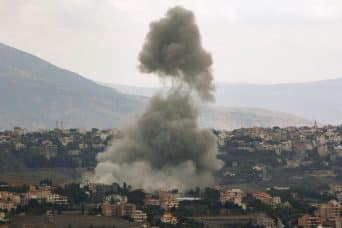
Israel has issued warnings to southern Lebanon residents as military operations continue in the region, signaling prolonged instability and uncertainty regarding diplomatic resolution prospects. The escalation reflects deepening regional tensions with implications for broader Middle Eastern geopolitical risk.
The Israeli military warnings to southern Lebanese civilians represent an escalation in regional tensions that extends beyond immediate conflict dynamics. This development underscores the fragility of Middle Eastern geopolitical stability and the persistent risk of broader regional destabilization. Military operations of this scale typically indicate entrenched positions and reduced near-term diplomatic pathways, suggesting extended uncertainty in the region.
Historically, Israeli-Lebanese military tensions have created regional instability cycles, but the scope and sustained nature of current operations suggest a shift toward prolonged engagement rather than contained skirmishes. The situation reflects accumulated grievances, security concerns, and proxy dynamics that resist quick resolution. Regional military escalations of this magnitude have previously triggered humanitarian crises and displaced populations, adding humanitarian dimensions to security concerns.
For cryptocurrency and financial markets, geopolitical crises in the Middle East create uncertainty that typically influences macroeconomic sentiment and risk asset valuations. Prolonged regional instability can trigger flight-to-safety dynamics, affecting both traditional and digital asset allocations. Energy market concerns, particularly regarding oil supplies from the region, create secondary economic pressures that ripple through broader markets. Risk-averse sentiment stemming from unresolved military tensions historically correlates with cryptocurrency volatility, as investors reassess exposure to high-risk assets.
Market participants should monitor diplomatic developments and any expansion of military operations, as significant escalation could trigger broader economic consequences affecting asset valuations across categories. The trajectory of these operations will influence regional stability assessments and investor risk positioning in coming weeks.
- →Israeli military warnings indicate prolonged regional operations with limited near-term diplomatic resolution prospects.
- →Extended Middle Eastern instability historically creates macroeconomic uncertainty affecting broader financial markets.
- →Geopolitical risk premiums may influence cryptocurrency and risk asset valuations amid unresolved tensions.
- →Energy market concerns from regional military operations can trigger secondary economic pressures.
- →Market participants should monitor escalation trajectories for broader geopolitical-economic spillover effects.