
Israeli airstrike devastates Christian Lebanese town, killing politician Pierre Mouawad
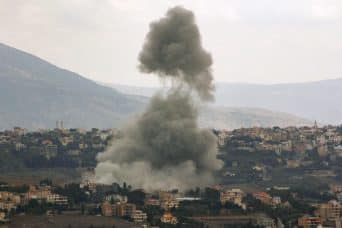
An Israeli airstrike killed Lebanese politician Pierre Mouawad in a Christian town, marking an expansion of conflict zones that escalates sectarian tensions in the region. The incident complicates ceasefire negotiations and threatens broader regional stability, with potential implications for global markets sensitive to Middle Eastern geopolitical risk.
The killing of Pierre Mouawad represents a significant escalation in the Israel-Lebanon conflict, as airstrikes now target Christian-majority areas previously considered outside primary conflict zones. This geographic expansion signals the conflict's widening scope beyond traditional Hezbollah strongholds, introducing unpredictability into regional dynamics. Mouawad's death, a prominent political figure, transforms the incident from a military operation into a political assassination with sectarian implications that could reshape Lebanese domestic politics.
The broader context involves months of heightened tensions between Israel and Hezbollah, with periodic ceasefire attempts failing to establish lasting peace. The targeting of a Christian politician complicates the sectarian calculus, potentially fracturing the delicate balance that has prevented Lebanon's various religious communities from fully aligning with broader conflict lines. This development contradicts previous patterns where Christian leaders maintained relative neutrality or strategic ambiguity.
For financial markets, the incident increases geopolitical risk premiums across energy markets, particularly crude oil and regional equities. Risk-off sentiment typically strengthens safe-haven assets like gold and US Treasury bonds while pressuring emerging market currencies. Cryptocurrency markets, which track macroeconomic risk sentiment, may experience selling pressure as investors reassess regional stability implications.
Looking ahead, observers should monitor Lebanese political responses, potential Israeli military escalation, and whether other regional powers intervene. Any broader conflagration involving multiple nations would significantly impact global energy supply and trigger substantial market volatility across equities, commodities, and alternative assets.
- →Israeli airstrikes now target Christian-majority Lebanese areas, expanding conflict geography beyond traditional zones
- →Politician Pierre Mouawad's death transforms military operations into sectarian political assassination
- →Escalation complicates ceasefire prospects and increases regional instability risks
- →Geopolitical risk premiums likely to increase across energy markets and emerging assets
- →Broader regional conflagration could significantly impact global financial markets