
Moonwell enables governance for WELL holders across multiple networks
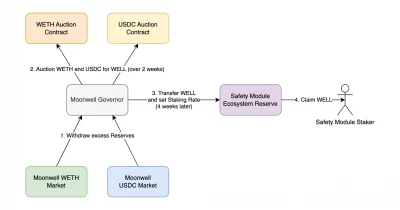
Moonwell has implemented cross-chain governance enabling WELL token holders to participate in protocol decisions across multiple blockchain networks. While this enhances accessibility and DeFi protocol efficiency, the mechanism risks centralizing governance power among wealthy participants due to high gas costs associated with voting on Ethereum.
Moonwell's rollout of multi-chain governance represents a technical advancement in addressing fragmentation across blockchain ecosystems. As DeFi protocols expand to multiple networks, governance structures must adapt to serve distributed communities. Moonwell's approach allows WELL holders on different chains to participate in protocol decisions, removing the previous requirement to bridge tokens to a single network for voting rights.
This development reflects broader industry trends toward cross-chain interoperability and chain-agnostic governance models. Protocols increasingly recognize that locking governance participation to single chains alienates users and concentrates voting power geographically and economically. Moonwell's multi-chain governance attempts to democratize participation and reflect the protocol's actual user distribution.
However, the implementation reveals a critical tension in decentralized governance. High gas costs on Ethereum create friction for small token holders wanting to participate, potentially creating a plutocracy where only well-capitalized voters engage in governance. This paradox—enabling broader participation while simultaneously raising barriers for smaller stakeholders—undermines the decentralization narrative.
Looking forward, observers should monitor voting participation rates across chain-specific governance implementations to assess whether multi-chain governance actually increases democratic participation or merely redistributes centralization. The success of Moonwell's model will likely influence how other multi-chain protocols design their governance structures, making this case study relevant for the broader DeFi ecosystem's evolution toward more inclusive decision-making mechanisms.
- →Moonwell enables WELL token governance across multiple blockchains, addressing multi-chain participation barriers
- →High gas costs on Ethereum risk concentrating voting power among wealthier participants despite broader accessibility
- →Multi-chain governance reduces the need to bridge tokens to single networks for voting participation
- →Implementation reveals tension between accessibility and true decentralization in DeFi governance
- →Model serves as bellwether for how other protocols design cross-chain governance structures