
NATO chief dismisses US exit risks despite Trump’s alliance criticism
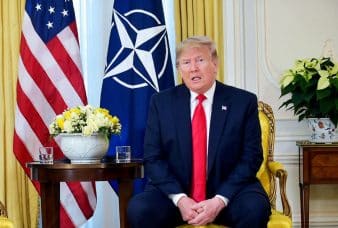
NATO's leadership has publicly dismissed concerns about potential US withdrawal from the alliance despite Donald Trump's repeated criticism of the organization. The statement reflects confidence in NATO's institutional stability and suggests market participants view the geopolitical risk as contained rather than imminent.
NATO leadership's dismissal of US exit risks represents a strategic reassurance campaign aimed at stabilizing alliance confidence amid political uncertainty in Washington. Trump's well-documented criticism of NATO burden-sharing and alliance commitments has created periodic tension with European partners, yet institutional resilience appears intact. The timing of such statements typically follows provocative rhetoric, serving as a stabilization mechanism to prevent cascading uncertainty among member states and their markets.
Historically, NATO has weathered multiple US-Europe relationship tensions since its 1949 founding. Trump's previous presidency (2017-2021) included similar alliance criticisms that ultimately resulted in no structural withdrawal, though they did accelerate European defense spending increases. The current cycle follows familiar patterns: political criticism generates headlines, institutional actors respond with reassurance, and structural continuity prevails over rhetoric. European nations have increasingly invested in independent defense capabilities, reducing absolute reliance on US commitment guarantees.
For cryptocurrency and financial markets, geopolitical stability directly impacts risk sentiment and capital flows. A stable NATO framework reduces tail-risk hedging demand and supports risk-on asset positioning. Conversely, sustained uncertainty about US alliance commitments could drive capital toward safe-haven assets and volatility products. The crypto market typically responds to macroeconomic uncertainty and geopolitical escalation more than European defense politics specifically.
Investors should monitor statements from both US political leadership and NATO regarding alliance commitments. Any concrete policy shifts—such as reduced military commitments, funding changes, or deployment modifications—would carry genuine market relevance. Current rhetoric alone remains within historical bounds and unlikely to trigger significant market dislocation. The focus should remain on measurable actions rather than cyclical criticism.
- →NATO leadership asserts institutional stability despite Trump's public criticism of alliance commitments
- →European defense spending increases have reduced dependence on US security guarantees over recent years
- →Historical precedent shows Trump's alliance criticism generated headlines but no structural policy changes
- →Market concern over US withdrawal appears limited based on NATO's official dismissal stance
- →Actual policy actions matter more than rhetoric for assessing genuine geopolitical risk to markets