
Nvidia and Genentech make the case for AI-driven drug discovery at BIO2026
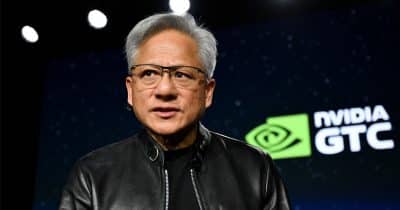
Nvidia and Genentech presented at BIO2026 on how artificial intelligence is transforming drug discovery by accelerating research timelines, reducing development costs, and enabling personalized treatment approaches. This collaboration highlights the growing convergence of AI technology and pharmaceutical innovation as a major driver of healthcare advancement.
The partnership between Nvidia and Genentech at BIO2026 underscores a pivotal shift in how the pharmaceutical industry approaches drug development. AI-driven discovery platforms can identify promising compounds and predict drug efficacy far more rapidly than traditional methods, potentially compressing development timelines from years to months. This acceleration directly addresses one of healthcare's costliest challenges: the average drug requires over a decade and billions in capital to reach market. By reducing both time and financial barriers, AI democratizes access to cutting-edge therapeutics.
The broader context reveals a maturing ecosystem where computational power meets biological complexity. Nvidia's GPU architecture provides the processing infrastructure necessary for training machine learning models on vast biological datasets, while companies like Genentech contribute domain expertise in translating algorithmic insights into viable treatments. This trend reflects growing recognition that AI infrastructure is not merely a software layer but foundational to 21st-century biotech.
For investors and stakeholders, this signals sustained demand for AI compute resources and validates long-term thesis around hardware-accelerated discovery platforms. Pharmaceutical companies face mounting pressure to improve R&D productivity; AI offers a competitive advantage in speed and cost-efficiency. The market impact extends beyond Nvidia's stock to the entire biotech sector, which increasingly depends on computational approaches.
Looking ahead, regulatory frameworks governing AI-discovered drugs will shape adoption rates. Clinical validation remains essential; successful AI-discovered therapies reaching market approval would represent a watershed moment, demonstrating the technology's real-world viability and attracting further capital investment into the space.
- →AI-driven drug discovery accelerates research timelines and reduces development costs, addressing fundamental pharmaceutical industry challenges
- →Nvidia's computational infrastructure enables machine learning models to process biological data at scale, creating essential infrastructure for biotech
- →Personalized treatment approaches powered by AI could transform healthcare delivery and improve patient outcomes
- →Successful AI-discovered drugs reaching market approval would validate the technology and attract substantial new investment
- →Regulatory clarity on AI-discovered therapeutics remains critical to widespread adoption across the pharmaceutical sector