
Nvidia CEO Jensen Huang declares support for President Trump at Beijing summit
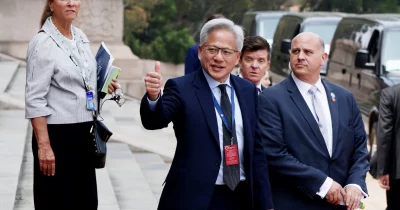
Nvidia CEO Jensen Huang publicly expressed support for President Trump during a Beijing summit, signaling the semiconductor giant's political alignment at a critical moment for US-China tech relations. This declaration carries significant implications for AI policy, semiconductor trade dynamics, and how major tech companies navigate geopolitical tensions.
Jensen Huang's public endorsement of Trump represents a notable moment in tech leadership positioning, occurring against the backdrop of escalating US-China competition in artificial intelligence and semiconductors. Nvidia's stance reflects the company's strategic interests in maintaining access to both US and Chinese markets while navigating increasingly restrictive trade policies. The timing and location of this declaration—at a Beijing summit—underscores Nvidia's balancing act between appeasing US political leadership and preserving its significant revenue stream from Chinese operations.
Historically, Nvidia has benefited enormously from AI's explosive growth, becoming a critical infrastructure provider for both domestic and international AI development. However, US export controls on advanced chips to China have created pressure on the company's business model. Major tech CEOs have traditionally maintained political neutrality to protect shareholder interests and market access. Huang's explicit support breaks this convention, suggesting either confidence in Trump's return to power or calculated risk-taking regarding Chinese retaliation.
For investors and market participants, this development signals potential policy shifts around semiconductor export restrictions, which directly impact Nvidia's revenue forecasts and valuation multiples. The declaration could influence how US regulators approach AI chip sales to China and whether other semiconductor leaders follow suit. Global chip manufacturers must now evaluate their own political positioning as the US-China tech competition intensifies.
Market observers should monitor regulatory responses from both US and Chinese governments, potential impacts on Nvidia's China revenue guidance, and whether Huang's move prompts coordinated action from other semiconductor executives. The intersection of political alignment and business strategy will shape semiconductor supply chain restructuring over the coming years.
- →Nvidia CEO's Trump endorsement at Beijing summit marks unusual political positioning by a major tech leader amid US-China tensions.
- →The move signals Nvidia's strategic calculations around AI policy, semiconductor exports, and access to critical markets.
- →Political declarations by tech CEOs could influence US regulatory decisions on chip sales and AI infrastructure restrictions.
- →Investors should monitor whether Huang's stance affects China revenue, regulatory treatment, or stock valuation.
- →The incident reflects broader geopolitical pressure on semiconductor companies to choose sides in US-China competition.