
Nvidia bets $150B on Taiwan as Trump's plan to make US an AI hub backfires
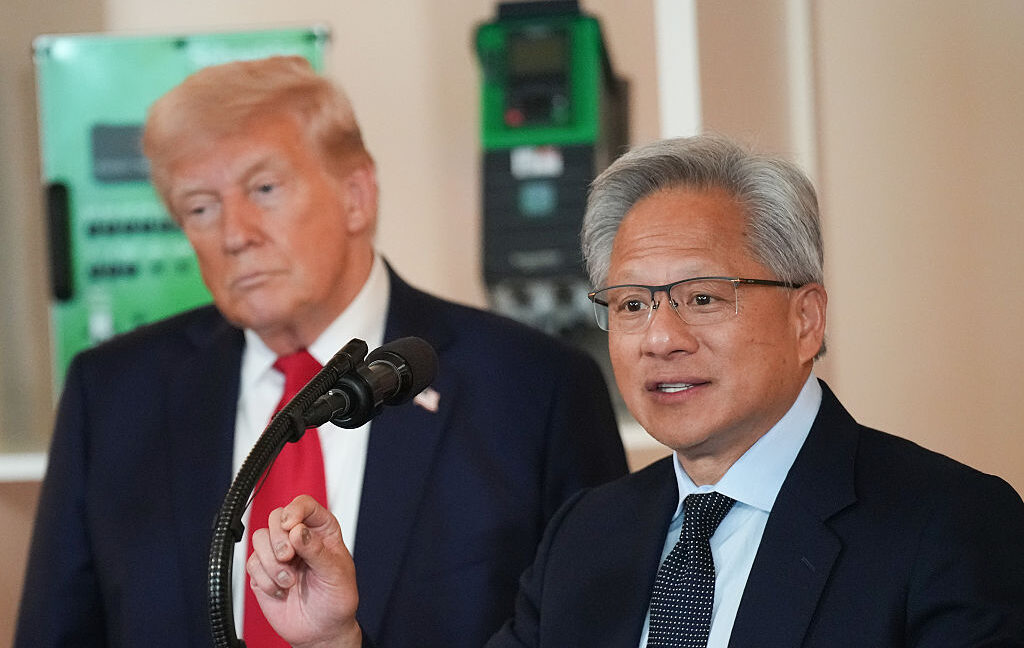
Nvidia announces a $150 billion annual investment in Taiwan to establish it as a global AI epicenter, signaling a strategic pivot away from the U.S. amid Trump administration policies aimed at centralizing AI development domestically. This move underscores tensions between geopolitical ambitions and market realities in semiconductor manufacturing and AI infrastructure.
Nvidia's $150 billion commitment to Taiwan represents a significant realignment in global AI infrastructure strategy. The investment directly contradicts the Trump administration's stated goal of making the United States the dominant AI hub, suggesting that market forces and manufacturing realities outweigh political directives. Taiwan's established semiconductor ecosystem, skilled workforce, and existing fabrication capacity make it more practical for rapid AI chip development than building new infrastructure in the U.S., despite policy incentives.
This decision reflects deeper geopolitical complexities surrounding semiconductor manufacturing. The U.S. has pushed to reshore chip production through legislation like the CHIPS Act, offering subsidies to encourage domestic manufacturing. However, companies like Nvidia prioritize speed to market and manufacturing efficiency over political alignment. Taiwan's TSMC already produces most advanced chips globally, and Nvidia's investment deepens this dependency rather than diversifying supply chains as policymakers intended.
For investors and the AI market, this signals that Taiwan will remain central to AI hardware development regardless of U.S. policy. The investment could strengthen Taiwan's geopolitical leverage while potentially limiting the effectiveness of American industrial policy. Tech companies face pressure to balance national interests with competitive imperatives, creating unpredictability in supply chain strategy.
Future developments will likely include continued friction between U.S. policymakers and tech companies, potential export restrictions on advanced chips, and accelerated investments in allied nations. Taiwan's position as the critical node in AI infrastructure becomes more entrenched, raising questions about long-term supply chain resilience and geopolitical stability.
- →Nvidia's $150B Taiwan investment prioritizes manufacturing efficiency over U.S. policy objectives to build domestic AI capacity
- →Taiwan's established semiconductor infrastructure and TSMC advantage prove more compelling than American subsidies for rapid deployment
- →The move signals market forces override geopolitical incentives when competing interests diverge
- →Taiwan's strategic importance in AI chip production deepens, increasing geopolitical concentration risk
- →U.S. industrial policy faces credibility challenges when major tech firms choose alternative jurisdictions