
Putin announces international AI alliance to enhance cooperation in AI development and infrastructure
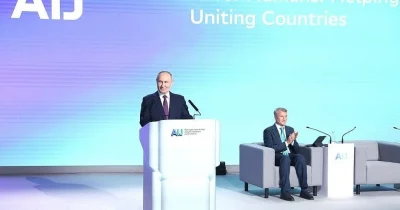
Putin has announced an international AI alliance aimed at strengthening cooperation in artificial intelligence development and infrastructure among participating nations. The initiative could potentially shift global AI market dynamics by reducing dependence on Western technology platforms and creating alternative AI governance structures.
Putin's announcement of an international AI alliance represents a strategic geopolitical move to establish non-Western alternatives in artificial intelligence development. This initiative emerges amid escalating technological competition between major powers and growing concerns about Western dominance in AI infrastructure and standards-setting. The alliance targets countries seeking to reduce reliance on American and European AI ecosystems, particularly nations facing sanctions or trade restrictions.
This development reflects broader trends of technological decoupling and the emergence of parallel digital infrastructures. Similar initiatives have emerged across various sectors, from cloud computing to semiconductor manufacturing, as nations prioritize technological sovereignty. The AI landscape, which has been heavily dominated by U.S. companies like OpenAI, Google, and Meta, faces potential fragmentation into competing spheres of influence.
For the cryptocurrency and blockchain sectors, this creates interesting dynamics. Decentralized AI infrastructure could align with blockchain principles of distributing computational resources across networks. However, centralized government-backed AI development may prioritize national interests over decentralization. Investors and developers should monitor whether this alliance adopts blockchain technologies for AI coordination or maintains traditional centralized governance models.
The market impact remains uncertain in the near term, as the alliance's technical capabilities and adoption rates remain unclear. Long-term implications include potential regulatory divergence in AI standards, creation of alternative AI training datasets, and shifts in how different regions develop and deploy AI applications. Key stakeholders should watch for partnership announcements, infrastructure investments, and any integration with blockchain technologies.
- →Putin's AI alliance aims to create non-Western alternatives to dominate AI infrastructure and reduce reliance on U.S. and European platforms
- →The initiative reflects broader geopolitical competition and technological decoupling trends accelerating across multiple sectors
- →Success depends on coordinated investment, talent retention, and ability to compete with advanced Western AI capabilities
- →Blockchain-based AI infrastructure could emerge as alignment point between decentralization principles and distributed development
- →Investors should monitor partnership scope, technical specifications, and potential integration with cryptocurrency technologies