
I Spent a Week Recording Myself Doing Chores for Money. Who's the Robot Now?
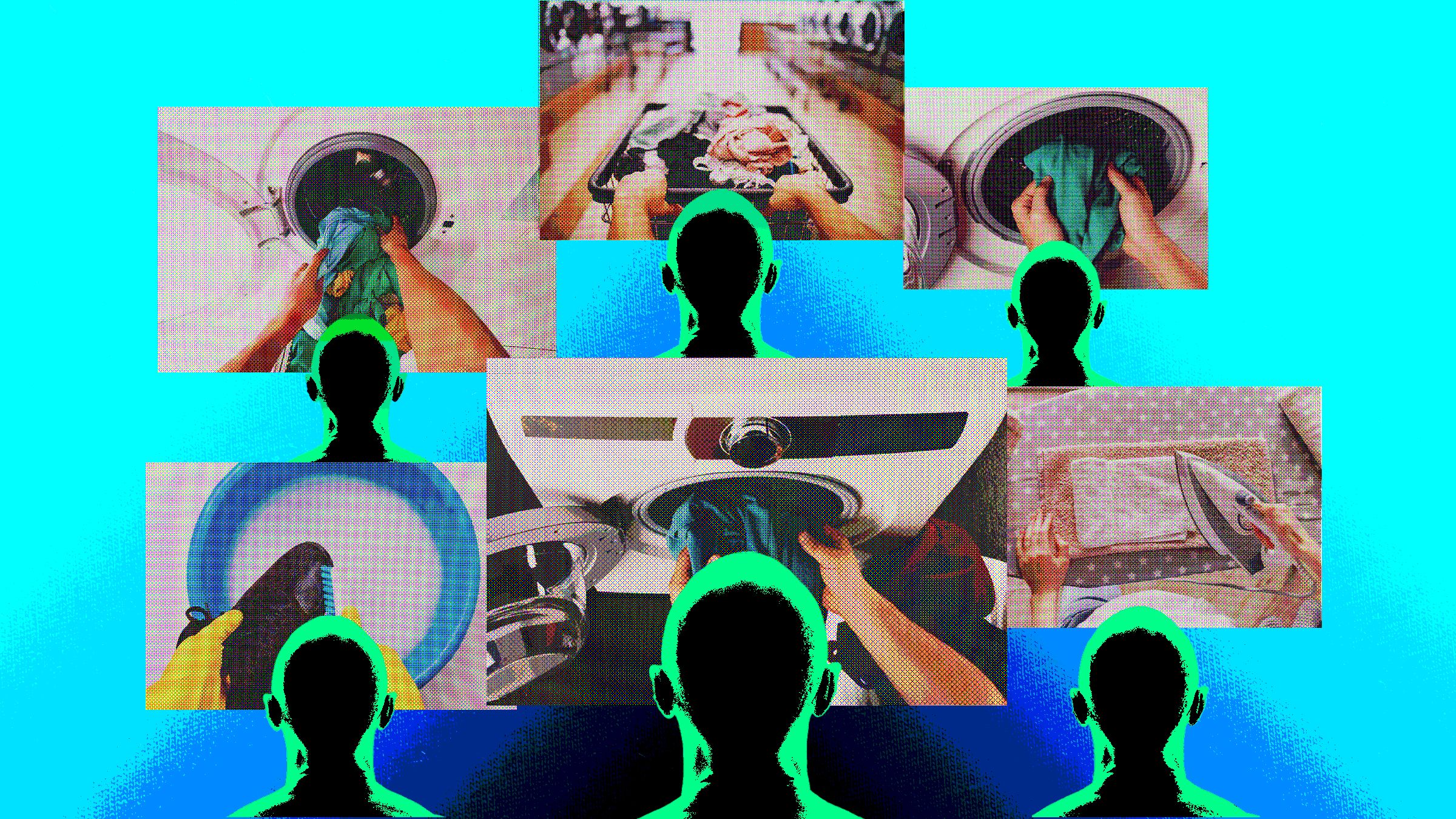
An individual monetized household chores by recording themselves performing everyday tasks to generate training data for humanoid robot development. The experiment highlights the emerging market for human labor data and raises questions about privacy, consent, and the economic implications of automating domestic work.
The article documents a participant's week-long engagement with data collection for AI robotics training, converting routine domestic activities into a commodity. This reflects a growing intersection between human labor and machine learning, where everyday actions become valuable training datasets for autonomous systems. The experiment demonstrates how companies are sourcing real-world behavioral data to improve humanoid robots' ability to understand and replicate human movements in realistic home environments.
This phenomenon emerges from accelerating progress in embodied AI and robotics, where companies like Tesla, Boston Dynamics, and various startups require vast amounts of annotated human behavior data. Traditional synthetic data proves insufficient for training robots to handle the infinite variability of real-world scenarios. By compensating individuals to record themselves performing tasks, companies bypass expensive motion capture studios while building diverse datasets across different body types, environments, and techniques.
From a market perspective, this creates a new gig-economy segment competing with traditional freelance platforms. It also raises questions about data ownership, privacy implications, and long-term labor market disruption. Workers monetizing their movements today may be training the systems that replace similar occupations tomorrow. For investors and developers, this signals strong demand for training data and validates the commercial viability of humanoid robotics projects requiring behavioral datasets.
Moving forward, expect regulatory scrutiny around consent mechanisms, data usage rights, and fair compensation standards for biometric data collection. The sustainability of this labor model depends on whether compensation remains competitive and whether participants fully understand how their data contributes to automation that could displace workers in domestic and service sectors.
- →Human behavioral data is becoming a monetizable commodity as robotics companies source training datasets from everyday activities.
- →The data collection model reveals growing commercial demand for embodied AI training material beyond synthetic simulations.
- →Participants face a paradox: earning income by training systems that could eventually automate their own work.
- →This emerging market lacks standardized compensation frameworks and clear data ownership agreements.
- →Regulatory frameworks around consent and biometric data usage will likely develop as the practice scales.