
iRobot co-founder Colin Angle reflects on Roomba’s role in launching the robot revolution
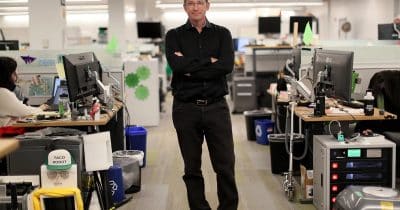
iRobot co-founder Colin Angle discusses how the Roomba's success demonstrated the critical importance of emotional connection and consumer appeal in driving adoption of robotic and AI technologies. The insight reveals that future robotics development will increasingly prioritize human-centered design and user experience alongside technical capabilities.
Colin Angle's reflection on Roomba's market dominance underscores a fundamental lesson in consumer technology: functional excellence alone does not guarantee adoption. The Roomba succeeded not merely as a cleaning device but as a relatable robotic companion that consumers welcomed into their homes, establishing an emotional bond that transcended utilitarian value. This distinction matters profoundly for the broader robotics and AI ecosystem currently in development.
The Roomba's trajectory emerged during the early 2000s when robotics remained confined to industrial settings and academic laboratories. By introducing autonomous machines into domestic spaces, iRobot fundamentally shifted cultural perception around human-robot interaction. The device's approachability and perceived personality transformed robots from intimidating technology into household helpers, effectively destigmatizing automation in consumer environments.
As AI and robotics technologies accelerate toward practical deployment, Angle's emphasis on emotional appeal carries significant market implications. Developers and investors increasingly recognize that consumer adoption hinges on trust, usability, and perceived personality—factors that directly influence valuations and market penetration. Companies prioritizing user experience and relatable design gain competitive advantages in emerging sectors like autonomous delivery systems, domestic robots, and AI assistants.
Looking ahead, the robotics industry will likely replicate Roomba's formula by embedding personality and approachability into next-generation systems. This human-centered approach becomes especially critical as robots expand into healthcare, elderly care, and social contexts requiring nuanced interaction. The convergence of emotional design principles with advancing AI capabilities represents the frontier where technological capability meets market success.
- →Emotional connection and consumer appeal are essential drivers of robotics adoption, not secondary considerations.
- →Roomba's success stemmed from transforming robots from industrial tools into relatable household companions.
- →Future AI and robotics development must prioritize human-centered design alongside technical performance.
- →User experience and perceived personality directly influence competitive advantage in emerging robotics markets.
- →The intersection of emotional design and AI capabilities will define next-generation robot market success.