
Russia claims it is no longer bound by nuclear arms limits after New START expiration
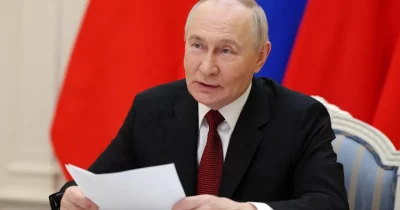
Russia has announced it is no longer bound by the New START nuclear arms treaty following its expiration, signaling the end of the last major nuclear agreement between Russia and the United States. This development escalates geopolitical tensions and removes key transparency mechanisms that had constrained nuclear arsenals for over a decade.
The expiration of New START represents a watershed moment in global security architecture. The treaty, which limited deployed strategic nuclear warheads and required verification inspections, provided one of the few remaining channels for U.S.-Russian military transparency. Russia's assertion that it is no longer constrained by the agreement removes institutional guardrails that have governed nuclear competition since the Cold War era.
This event reflects years of deteriorating U.S.-Russia relations, accelerated by the 2022 invasion of Ukraine and subsequent Western sanctions. Russia suspended participation in New START inspections in 2023, signaling intent to abandon the framework entirely. The agreement's lapse coincides with broader NATO expansion concerns and Russian nuclear rhetoric that has become increasingly aggressive, including references to tactical nuclear weapon deployment in Ukraine.
For cryptocurrency and blockchain markets, nuclear geopolitical crises historically correlate with safe-haven asset rotations. Capital flows toward Bitcoin and gold during periods of elevated geopolitical risk, as investors seek assets perceived as uncorrelated to traditional financial systems and national currencies. However, this particular development may initially pressure risk assets if broader market anxiety increases.
Looking forward, observers should monitor whether either superpower conducts nuclear weapons tests or announces unilateral arsenal expansions. The absence of verification mechanisms removes early-warning capabilities, increasing the risk of miscalculation. Future arms control negotiations appear unlikely in the near term, suggesting sustained geopolitical uncertainty that could periodically stimulate cryptocurrency demand as a hedge against systemic instability.
- →New START expiration removes the last major U.S.-Russia nuclear arms limitation treaty and its transparency mechanisms
- →Russia's move reflects escalating geopolitical tensions tied to Ukraine conflict and NATO relations
- →Unregulated nuclear competition increases systemic uncertainty and safe-haven asset demand
- →Cryptocurrency markets may experience volatility as investors reassess geopolitical risk exposure
- →Absence of verification mechanisms heightens risk of miscalculation between nuclear powers