
Sanctioned tankers pass through Strait of Hormuz despite US blockade
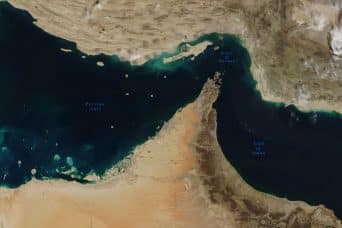
Sanctioned tankers have successfully navigated the Strait of Hormuz despite US enforcement efforts, revealing significant gaps in blockade implementation. The passage demonstrates that geopolitical sanctions face practical enforcement limitations that may weaken their effectiveness over time.
The successful passage of sanctioned tankers through the Strait of Hormuz represents a critical failure point in US sanctions enforcement mechanisms. This development signals that despite regulatory frameworks designed to restrict vessel movement and cargo transport, determined actors continue to circumvent controls through operational tactics such as vessel tracking disablement, flag changes, or coordinated timing. The Strait of Hormuz remains one of the world's most strategically vital chokepoints, handling approximately 20-30% of global petroleum transit, making enforcement particularly challenging given the volume of traffic and complexity of maritime coordination.
Historically, sanctions regimes have relied on secondary enforcement—pressuring third-party nations and financial institutions to comply with restrictions. However, the erosion of blockade effectiveness suggests that enforcement costs for violators remain manageable relative to sanctions-evasion revenues. This pattern has emerged across multiple sanctions regimes, from Russian oil exports to Iranian crude, where creative logistics solutions consistently emerge faster than regulatory adaptation.
For cryptocurrency and blockchain markets, sanctions enforcement challenges carry significant implications. If traditional maritime and financial sanctions prove porous, investors must reassess the reliability of regulatory frameworks that governments claim will restrict sanctioned entities from accessing crypto markets. This creates uncertainty around compliance risk premiums and suggests that capital controls may be less effective than policymakers suggest. The broader implication points to growing challenges in maintaining geopolitical cohesion on enforcement, potentially benefiting decentralized finance protocols that operate outside traditional enforcement jurisdictions.
Future developments will likely accelerate investment in advanced tracking technologies and multi-jurisdictional enforcement coordination, potentially driving adoption of blockchain-based vessel tracking systems as alternative compliance infrastructure.
- →Sanctioned tankers successfully bypassed US blockade efforts in the Strait of Hormuz, exposing enforcement weaknesses
- →Maritime sanctions enforcement faces practical limitations that worsen as violators develop more sophisticated evasion techniques
- →Weak traditional sanctions enforcement may increase confidence in decentralized finance alternatives immune to government interdiction
- →Geopolitical divisions limit multilateral coordination needed for effective blockade implementation
- →Investors should discount the reliability of regulatory sanctions as mechanisms for restricting capital flows