
Senegal faces World Cup elimination against Iraq as prediction markets back the Lions of Teranga
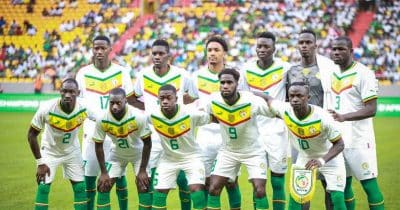
Senegal faces elimination from the World Cup in their match against Iraq, with prediction markets favoring the Lions of Teranga despite the high-stakes scenario. The article highlights how expanded tournament formats create unpredictability and elevated risk in sports betting markets.
The Senegal-Iraq World Cup matchup represents a critical juncture in modern sports prediction markets, where algorithmic assessments and crowd-sourced odds diverge from traditional sports analysis. As tournament formats expand globally, the complexity of predicting outcomes increases exponentially, creating both opportunities and risks for market participants. Prediction markets have evolved into sophisticated instruments that aggregate information from thousands of participants, yet major upsets in expanded tournaments demonstrate their limitations in capturing all relevant variables affecting outcomes.
The expansion of World Cup formats has fundamentally altered competitive dynamics by introducing more teams and reducing the cushion for traditional powerhouses. Senegal, despite favorable odds from prediction markets, faces genuine elimination risk, reflecting how expanded brackets increase variance and reduce the reliability of historical precedent. This creates an environment where unexpected results become statistically more probable, challenging market efficiency assumptions.
For participants in sports prediction markets, this scenario underscores the importance of distinguishing between implied probabilities and actual competitive realities. Markets backing Senegal may reflect brand recognition and historical performance rather than current form or matchup-specific advantages. The economic impact extends to decentralized prediction platforms built on blockchain technology, where such events test smart contract mechanisms and liquidity models under conditions of genuine uncertainty. Traders relying solely on market consensus without deeper analysis face elevated risks.
- →Expanded World Cup formats increase unpredictability and create gaps between market consensus and actual match outcomes
- →Prediction markets favor Senegal despite genuine elimination risk against Iraq, suggesting potential mispricing
- →High-stakes sports events stress-test blockchain-based prediction platforms and their smart contract mechanisms
- →Market participants must distinguish between historical pricing patterns and match-specific competitive factors
- →Tournament structure changes fundamentally alter the risk-reward profiles for sports betting and prediction markets