
SoftBank’s Masayoshi Son pitches $1 trillion AI manufacturing complex in Arizona
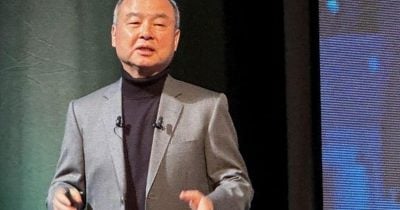
SoftBank's Masayoshi Son has unveiled plans for a $1 trillion AI manufacturing complex in Arizona, positioning the project as a transformative initiative for US tech manufacturing. The ambitious development aims to advance AI and robotics capabilities domestically, though execution challenges remain substantial.
Masayoshi Son's $1 trillion Arizona manufacturing proposal represents a significant bet on US artificial intelligence infrastructure consolidation. This announcement reflects growing recognition among global tech investors that semiconductor and AI hardware manufacturing capacity represents critical strategic infrastructure in the intelligence economy. Son's track record with Vision Fund deployments suggests serious financial backing, though the scale of this project dwarfs typical tech infrastructure investments.
The initiative emerges amid broader US-China competition for technological dominance and domestic manufacturing renaissance initiatives. Recent government incentives for semiconductor manufacturing, coupled with supply chain vulnerabilities exposed during the pandemic, have created favorable conditions for large-scale domestic chip production. Arizona's existing semiconductor ecosystem and favorable regulatory environment make it an logical choice for such a facility.
For the AI and robotics sectors, such infrastructure could accelerate innovation cycles by reducing hardware bottlenecks that currently constrain model development and deployment. Investors in AI infrastructure, semiconductor equipment, and robotics companies could benefit from increased domestic capacity and reduced reliance on international supply chains. The project would generate substantial employment in Arizona and potentially shift manufacturing paradigms across North America.
The execution challenges are formidable: regulatory approval, talent acquisition, supply chain coordination, and market demand validation all present risks. Geopolitical tensions and semiconductor export controls could impact feasibility. Stakeholders should monitor whether formal agreements materialize between SoftBank, Arizona authorities, and potential technology partners. The actual timeline and funding commitments remain critical factors determining whether this remains aspirational or becomes reality.
- →SoftBank proposes $1 trillion AI manufacturing complex in Arizona to reshape US tech infrastructure
- →Project targets AI and robotics sectors while addressing domestic supply chain vulnerabilities
- →Arizona's existing semiconductor ecosystem provides strategic advantages for the facility location
- →Execution faces substantial regulatory, logistical, and market validation challenges
- →Success could accelerate AI hardware innovation cycles and reduce international manufacturing dependencies