
South Korea exports set to rise for 12th straight month as chip boom reshapes global trade
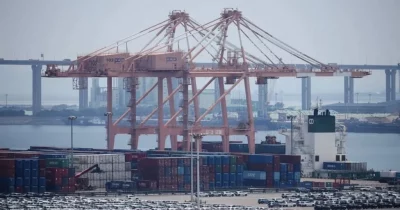
South Korea is experiencing its 12th consecutive month of export growth, driven primarily by surging semiconductor demand linked to global AI infrastructure investment. This trend underscores semiconductors' central role in reshaping international trade patterns and reflects sustained capital allocation toward AI-enabling hardware.
South Korea's sustained export momentum signals a fundamental shift in global trade driven by semiconductor demand. The country's 12-month consecutive growth streak demonstrates the staying power of the AI infrastructure cycle rather than temporary market fluctuation. Semiconductors have become the bellwether for technological advancement and capital deployment globally, with South Korea positioned as a critical supplier benefiting from this secular trend.
Historically, South Korea built its export economy on semiconductor leadership through companies like Samsung and SK Hynix. The current AI boom has reignited demand for advanced chips used in data centers, training infrastructure, and inference servers. This cycle differs from previous chip booms because it's driven by structural demand for AI capabilities across industries rather than cyclical consumer electronics refreshes. The consistency of 12 months of growth suggests this demand remains robust and sustainable.
For investors and market participants, South Korea's export strength provides a proxy for global AI infrastructure investment health. Strong semiconductor exports indicate continued capital spending by hyperscalers and enterprises building out AI capabilities. This has downstream implications for hardware manufacturers, cloud service providers, and cryptocurrency infrastructure operators who depend on computational resources.
Looking forward, market observers should monitor whether South Korea maintains this export trajectory as AI infrastructure investment potentially matures. Any slowdown could signal cooling demand for chips, suggesting either market saturation or a shift in AI deployment strategies. Geopolitical factors, particularly US-China semiconductor restrictions, continue to shape competitive dynamics and may further benefit South Korea's position as a neutral, reliable supplier.
- →South Korea's 12th consecutive month of export growth is primarily driven by semiconductor demand from AI infrastructure investments
- →Semiconductors have become the primary engine of global trade restructuring, reflecting sustained capital allocation to AI capabilities
- →Strong export data serves as a leading indicator for global AI infrastructure spending and hyperscaler investment levels
- →South Korea's positioning as a neutral chip supplier strengthens amid geopolitical semiconductor competition between US and China
- →Sustained export momentum suggests AI infrastructure demand remains structural rather than cyclical, supporting long-term semiconductor demand