
S&P 500 companies are talking about oil prices constantly but barely changing their forecasts
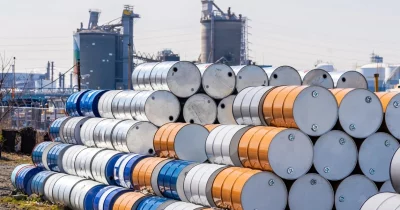
S&P 500 companies frequently discuss oil price volatility in earnings calls and guidance, yet their actual financial forecasts remain largely unchanged, indicating either effective hedging strategies or market confidence in their ability to absorb cost pressures without materially impacting profitability.
The disconnect between corporate rhetoric and forecasting behavior reveals important insights about risk management in large-cap equities. S&P 500 firms are clearly conscious of oil price exposure—evidenced by frequent mentions in earnings communications—yet they continue to maintain stable guidance despite global energy price volatility. This pattern suggests two complementary dynamics at work: either these companies have implemented sophisticated hedging mechanisms that effectively insulate them from commodity fluctuations, or their business models and margins possess sufficient resilience to absorb reasonable cost variations without requiring forecast revisions.
Historically, oil price sensitivity has been a major driver of S&P 500 earnings volatility, particularly affecting energy, transportation, and manufacturing sectors. The current environment reflects a maturation in corporate financial risk management, where diversified large-cap firms have learned to operationally and financially mitigate commodity exposure through various mechanisms including futures contracts, long-term supply agreements, and price-pass-through mechanisms to consumers.
For investors, this behavior carries dual implications. On one hand, stable guidance despite acknowledged commodity headwinds reinforces confidence in corporate earnings quality and management credibility. On the other hand, the lack of forecast adjustments may mask underlying margin compression that could eventually manifest in future guidance cuts if oil prices sustain elevated levels or volatility increases significantly.
Market participants should monitor whether this pattern persists through successive earnings seasons or whether companies eventually acknowledge margin pressures through revised guidance. The sustainability of unchanged forecasts will depend on whether oil prices stabilize or continue their unpredictable trajectory, and whether pass-through pricing mechanisms remain effective amid potential demand pressures.
- →S&P 500 companies discuss oil prices frequently but maintain stable financial forecasts, indicating effective hedging or strong operational resilience
- →Large-cap firms appear to have successfully insulated themselves from commodity volatility through financial derivatives and supply chain management
- →The gap between rhetoric and forecast revisions may mask underlying margin compression that could surface in future guidance adjustments
- →Corporate hedging effectiveness provides earnings stability for investors but may obscure true operational pressure points
- →Sustained unchanged guidance amid commodity volatility reflects maturation in corporate risk management practices