
Stock futures fall as investors brace for SpaceX’s $1.75 trillion IPO
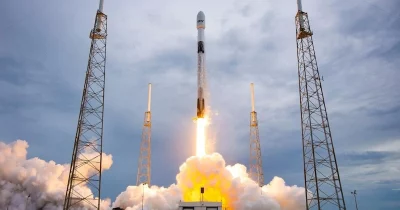
SpaceX's anticipated $1.75 trillion IPO is expected to trigger significant market volatility as massive capital inflows redirect investor funds away from equities and crypto assets. Stock futures are declining in anticipation of the listing, reflecting concerns about capital reallocation across risk assets during the IPO event.
SpaceX's imminent initial public offering represents one of the largest capital raises in market history, and its execution poses meaningful implications for broader financial markets. The $1.75 trillion valuation reflects extraordinary investor appetite for the aerospace company, but this concentration of capital demand creates a zero-sum dynamic where funds flowing into SpaceX must originate from existing portfolios. Historically, mega-IPOs have triggered temporary market dislocations as institutional investors rebalance holdings to participate in high-profile offerings.
The cryptocurrency market remains particularly sensitive to capital rotation events given its liquidity constraints relative to traditional equities. When investors shift capital toward mega-cap IPOs, crypto assets often experience outflows as traders liquidate positions to fund allocations. The SpaceX IPO serves as a proxy for broader investor risk appetite and portfolio rebalancing cycles. Stock futures declining ahead of the offering indicates market participants are pricing in potential headwinds from capital displacement.
For cryptocurrency markets specifically, the timing compounds existing macro pressures. Digital assets perform best when capital is abundant and flowing toward higher-risk investments. A massive IPO draw on available capital—particularly from retail and institutional allocators—can suppress demand for crypto holdings. This dynamic disproportionately affects technology and growth-oriented crypto projects that compete with SpaceX for growth-focused investor capital.
Investors should monitor post-IPO stabilization periods, as volatility typically subsides once the initial capital absorption completes. The key variable remains whether the SpaceX offering attracts net new capital to markets or primarily reallocates existing positions. Understanding this distinction determines whether crypto volatility represents a short-term technical dislocation or signals broader shifts in investor sentiment.
- →SpaceX's $1.75 trillion IPO is triggering capital rotation away from equities and crypto assets before listing
- →Stock futures are declining as investors prepare for massive capital reallocation required to fund the offering
- →Cryptocurrency markets face outflow pressure when mega-IPOs compete for investor capital allocation
- →The timing of the IPO coincides with potential liquidity constraints affecting growth-oriented assets
- →Post-IPO volatility typically subsides once initial capital absorption completes, creating potential reentry opportunities