
SparkLend reports $725M WETH borrowed, maintains low rates below 2%
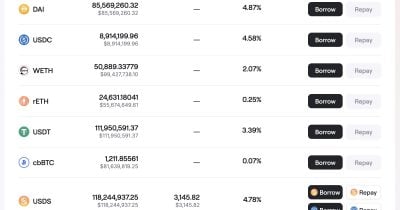
SparkLend has reached $725M in borrowed WETH while maintaining borrowing rates below 2%, demonstrating strong DeFi adoption momentum. However, the platform's reliance on ETH staking yields to sustain these low rates creates potential vulnerabilities if staking returns decline.
SparkLend's achievement of $725M in WETH borrowing represents significant traction in the competitive lending protocol space, where user acquisition directly correlates with total value locked. The sub-2% borrowing rates are extraordinarily attractive compared to traditional finance alternatives and indicate a capital-efficient market where supply substantially exceeds demand for credit. This pricing dynamic reflects the underlying mechanics of lending protocols where lenders' returns depend on borrowing demand and protocol revenue sources.
The critical issue flagged in the article concerns the sustainability model behind these rates. SparkLend appears to supplement lender yields through ETH staking returns, creating a dependency on Ethereum's consensus layer economics. This structure worked efficiently during periods of elevated staking yields, but introduces fragility—if Ethereum's staking APY compresses due to increased validator participation or reduced MEV extraction, lenders face diminished returns despite maintaining their capital deployment.
For the broader DeFi ecosystem, SparkLend's low-rate strategy functions as both opportunity and warning. Ultra-competitive rates drive user migration and normalize borrowing costs across protocols, potentially accelerating institutional adoption of decentralized credit markets. However, this competitive race incentivizes protocols to lever yield farming, cross-protocol token incentives, or unsustainable subsidy structures rather than organic fee generation.
The sustainability question becomes paramount as DeFi matures. Protocols must transition from rate competition funded by external yields toward business models based on genuine protocol utility and revenue capture. Monitoring SparkLend's rate evolution and lender yield trends provides insight into whether DeFi lending economics can sustain without external subsidy structures.
- →SparkLend's $725M WETH borrow volume demonstrates substantial user adoption in the lending protocol market
- →Sub-2% borrowing rates depend partly on ETH staking yields, creating dependency risk if validator economics shift
- →Competitive sub-2% rates accelerate DeFi adoption but may signal unsustainable subsidy-driven economics
- →Lender returns face compression risk if staking yields decline without corresponding increase in borrow demand
- →Protocol sustainability requires transition from yield-farming subsidies to organic fee-based revenue models