
Bulk carrier fire off Qatar heightens Strait of Hormuz tensions
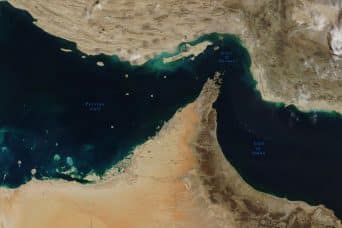
A bulk carrier fire off Qatar has intensified concerns about stability in the Strait of Hormuz, a critical chokepoint for global oil transit. The incident underscores geopolitical risks that directly impact energy markets and crypto-correlated asset volatility.
The bulk carrier fire represents another destabilizing event in the Strait of Hormuz, one of the world's most strategically important maritime corridors. Approximately 21% of global petroleum passes through this narrow waterway between Iran and Oman, making any disruption a matter of international concern. The incident highlights the fragility of energy supply chains in a region marked by escalating tensions, military posturing, and occasional attacks on commercial vessels.
Geopolitical instability in the Middle East has historically triggered oil price spikes, which cascade through global financial markets. Cryptocurrency markets, particularly Bitcoin and Ethereum, exhibit correlation with macroeconomic uncertainty and inflationary pressures stemming from energy shocks. When oil prices surge due to supply concerns, central banks may adjust monetary policy, affecting risk appetite and crypto valuations. The Strait of Hormuz incidents have become increasingly frequent over recent years, reflecting broader regional tensions involving the U.S., Iran, and regional powers.
For cryptocurrency investors and traders, energy market disruptions serve as early warning signals for broader macro volatility. Oil price spikes typically precede risk-off sentiment, potentially weakening crypto asset prices in the short term. However, some investors view energy crisis scenarios as inflationary catalysts that support long-term store-of-value narratives around Bitcoin. Market participants should monitor Strait of Hormuz developments closely as indicators of geopolitical risk premium and potential monetary policy shifts.
The sustainability of critical maritime routes remains a watch point for macroeconomic stability. Future incidents could trigger more severe supply shocks and volatile market reactions across equities, commodities, and cryptocurrency sectors.
- →Bulk carrier fire in Strait of Hormuz signals ongoing geopolitical instability affecting 21% of global oil transit
- →Middle East supply disruptions historically trigger oil price spikes with downstream effects on cryptocurrency valuations
- →Crypto markets exhibit correlation with macroeconomic shocks stemming from energy market instability
- →Investors should monitor Strait of Hormuz incidents as risk indicators for broader market volatility
- →Regional tensions continue to create fragility in critical global infrastructure with inflationary implications