
Trump confirms US support for Israel in potential Iran attack as crypto markets react to Middle East tensions
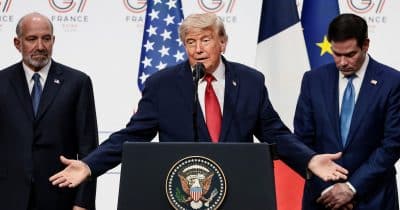
Trump publicly confirmed US support for Israel in a potential military response to Iran, triggering volatility across cryptocurrency markets as investors reassess risk amid escalating Middle East tensions. The geopolitical escalation underscores how macroeconomic instability and regional conflicts create spillover effects into digital asset pricing and market sentiment.
Geopolitical crises traditionally drive safe-haven demand and portfolio reallocation, with cryptocurrency markets increasingly sensitive to macro shocks. Trump's explicit backing of Israel in potential retaliatory action against Iran represents a material escalation that investors interpret as heightened systemic risk, prompting both defensive positioning and uncertainty-driven volatility across crypto markets. The statement matters because it removes diplomatic ambiguity and raises the probability of direct military engagement, a scenario that historically correlates with risk-off sentiment in growth assets and digital currencies.
Crypto markets have matured as macro-correlated instruments over the past three years, particularly Bitcoin and Ethereum, which now trade alongside traditional risk assets rather than in isolation. When geopolitical tension rises, investors typically reduce leverage, trim speculative positions, and shift capital toward liquid, non-correlated assets—creating short-term selling pressure in crypto. However, prolonged conflict scenarios have historically benefited Bitcoin as a store of value and inflation hedge, especially if traditional financial infrastructure faces disruption or if central banks intervene with monetary stimulus.
The immediate market impact includes increased volatility in Bitcoin, Ethereum, and altcoin pairs, wider bid-ask spreads on derivatives, and elevated liquidation risk for leveraged traders. Institutional investors may temporarily reduce crypto allocation as part of broader risk-management during geopolitical uncertainty. Looking ahead, traders should monitor military developments, oil price movements (which signal systemic stress), and central bank communication, as policy responses to conflict may ultimately support crypto markets through inflation or currency debasement concerns.
- →Trump's explicit Iran support statement raised Middle East conflict probability, triggering immediate crypto market volatility and risk-off positioning.
- →Cryptocurrency markets now exhibit macro correlation patterns typical of risk assets, making them sensitive to geopolitical escalation.
- →Short-term market impact includes increased leverage liquidation risk and wider trading spreads across major crypto pairs.
- →Prolonged conflict scenarios historically favor Bitcoin as a non-correlated store of value and inflation hedge.
- →Investors should monitor oil prices and central bank responses as secondary indicators for longer-term crypto market direction.