
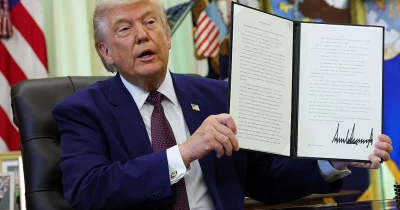
Trump has indicated the U.S. government may acquire equity stakes in artificial intelligence companies, a potential shift in public investment strategy that could democratize access to AI industry profits. This proposal represents an unconventional approach to capturing value from the rapidly growing AI sector while potentially reshaping government-industry relationships.
Trump's suggestion to take equity stakes in AI companies marks a significant departure from traditional government-tech relations and signals growing recognition of AI's strategic and economic importance. Rather than purely regulatory oversight or subsidies, direct equity ownership would give the government financial upside participation in AI sector growth while potentially influencing corporate direction. This approach reflects broader concerns about private capital concentration in transformative technologies and follows similar precedent in other strategic industries where governments have historically taken stakes in critical infrastructure.
The proposal emerges amid intensifying competition between major powers over AI dominance. The U.S. government currently relies primarily on grants, research funding, and regulatory frameworks to influence AI development. Direct equity participation could accelerate government involvement while creating new revenue streams for public treasuries. However, this model raises questions about conflict of interest, governance challenges, and potential market distortions when government becomes both regulator and shareholder.
For the AI industry, equity participation signals unprecedented government interest in capturing AI value creation. This could attract government capital to promising startups while subjecting companies to enhanced scrutiny and political considerations in business decisions. Investors may face dilution or governance complications from government shareholders. The proposal also hints at potential industrial policy priorities, where government stakes could steer AI development toward public interest goals rather than pure profit maximization. Watching how this actually develops—whether it affects existing companies, which sectors receive priority, and what governance structures emerge—will determine real market impact.
- →Direct government equity stakes in AI firms represent a novel public investment approach beyond traditional subsidies or regulation.
- →The proposal suggests geopolitical competition over AI is intensifying global power struggles and economic advantage.
- →Government shareholders could create governance conflicts and potentially influence AI development priorities toward political objectives.
- →Existing AI investors may face unexpected dilution or strategic constraints from government stakeholders.
- →The actual implementation details—scope, valuation methods, governance rights—remain unclear but will significantly determine market impact.