
US maintains control over Strait of Hormuz amid Iran tensions, says Hegseth
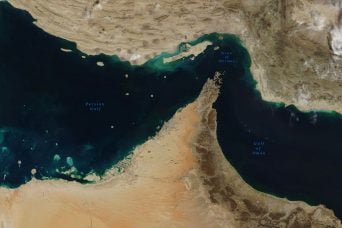
U.S. Defense Secretary Hegseth affirmed American military control over the Strait of Hormuz amid escalating Iran tensions, a critical chokepoint through which approximately 21% of global petroleum passes. This geopolitical assertion could extend energy market volatility and maritime trade uncertainties, with potential ripple effects on cryptocurrency valuations tied to macroeconomic stability.
The assertion of U.S. control over the Strait of Hormuz represents a significant geopolitical posture in a region characterized by longstanding tensions between the United States and Iran. Hegseth's statement underscores Washington's commitment to maintaining freedom of navigation through one of the world's most strategically vital waterways, where roughly one-fifth of global oil shipments transit daily. This declaration matters because any disruption to Hormuz operations would immediately constrain energy supplies and elevate crude prices globally.
Historically, the Strait has been a flashpoint during periods of U.S.-Iran friction, including the 2019-2020 tanker incidents and the 2024 escalations following regional proxy conflicts. These tensions have consistently created uncertainty in oil markets, which influences macroeconomic conditions and investor risk appetite. When energy prices spike due to geopolitical concerns, central banks face inflation pressures that affect monetary policy—a variable crypto markets react to significantly.
For cryptocurrency and digital asset investors, energy supply disruptions carry dual implications. Rising oil prices compress macroeconomic growth expectations, typically weakening risk assets including cryptocurrencies. Conversely, persistent geopolitical uncertainty drives some institutional capital toward alternative assets perceived as uncorrelated to traditional markets. The Strait's criticality means any meaningful disruption could trigger volatility across equity, commodity, and crypto markets simultaneously.
Market participants should monitor Iranian military responses and U.S. naval posturing in the Persian Gulf. Escalation scenarios could trigger energy-driven inflation concerns, affecting Bitcoin and altcoin valuations in relation to broader risk-off sentiment and Federal Reserve policy expectations.
- →U.S. maintains military dominance over Strait of Hormuz, critical to 21% of global petroleum trade
- →Geopolitical tensions could prolong energy market volatility and broader macroeconomic uncertainty
- →Oil price spikes from Hormuz disruption risks would compress growth expectations and weaken risk assets
- →Cryptocurrency markets face dual pressure from inflation concerns and potential safe-haven flows during escalation
- →Investors should watch Persian Gulf military developments as key risk indicators for crypto market volatility