
US strikes Iranian missile and drone sites as Bitcoin slides toward $61K
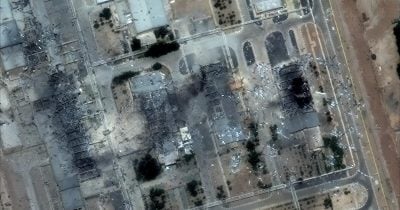
Escalating US-Iran military tensions, marked by recent American strikes on Iranian missile and drone facilities, are creating significant headwinds for global markets and cryptocurrency valuations. Bitcoin's slide toward $61,000 reflects broader investor risk aversion triggered by geopolitical uncertainty, with crypto serving as a sensitive barometer for macroeconomic stress and flight-to-safety dynamics.
Military escalation between the United States and Iran introduces systemic risk into global financial markets, with cryptocurrency experiencing immediate downward pressure as investors reassess their risk exposure. The targeting of Iranian military infrastructure raises concerns about potential retaliatory actions and regional instability, triggering the classic risk-off sentiment that typically pressures alternative assets like Bitcoin.
This geopolitical friction operates within a complex ecosystem affecting energy markets, currency valuations, and institutional investor positioning. Historical precedent demonstrates that Middle Eastern conflicts create supply-side shocks in oil markets, driving inflationary expectations that traditionally support commodities but create uncertainty for speculative assets. The crypto market's sensitivity to these macro events reflects its role as a risk asset correlated with equity market performance rather than traditional safe-haven dynamics.
Bitcoin's movement toward $61,000 indicates capital rotation toward traditional safe havens—US Treasury bonds, gold, and low-volatility equities—as investors liquidate positions in higher-risk categories. The broader implications extend to cryptocurrency adoption narratives, as geopolitical instability theoretically strengthens arguments for decentralized financial systems, yet market behavior demonstrates that immediate uncertainty suppresses risk appetite across all non-core asset classes.
Market participants should monitor escalation signals from diplomatic channels, Iranian response mechanisms, and oil price movements as key indicators of broader crypto volatility. Extended regional tensions could reshape cryptocurrency market structure if institutional capital flows shift permanently toward geopolitical hedging strategies rather than speculative positioning.
- →Geopolitical tension between US and Iran triggers risk-off sentiment, pushing Bitcoin lower toward $61,000 support levels
- →Cryptocurrency markets function as volatility gauges for macro instability, reacting faster than traditional assets to crisis events
- →Regional military escalation threatens oil supply stability, creating inflationary uncertainty that pressures speculative assets
- →Capital flight from risk assets during geopolitical crises favors traditional safe havens over digital assets despite decentralization arguments
- →Extended conflict could reshape institutional crypto positioning if investors shift toward geopolitical hedging over speculation