
US military conducts first unmanned sea drone rescue after Iranian drone incident near Strait of Hormuz
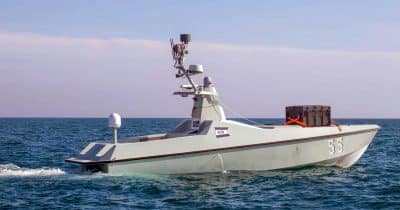
The US military successfully conducted its first unmanned sea drone rescue operation following an Iranian drone incident near the Strait of Hormuz, marking a significant milestone in autonomous military technology deployment. This event reflects a broader strategic shift toward autonomous systems in defense operations, with potential implications for future conflict dynamics and geopolitical stability.
The US military's first unmanned sea drone rescue represents a critical inflection point in autonomous military systems. This operation demonstrates that autonomous platforms can now handle complex, real-world scenarios beyond surveillance and reconnaissance—executing coordinated rescue missions in contested waters. The successful deployment validates years of development and testing, moving autonomous systems from theoretical capabilities to operational reality in high-stakes environments.
The incident occurred amid escalating tensions in the Strait of Hormuz, one of the world's most strategically vital waterways. Iran's drone activity in this region has become increasingly frequent, reflecting broader geopolitical competition between US and Iranian interests. The US response—deploying autonomous systems rather than traditional crewed vessels—signals a deliberate pivot toward reducing personnel risk in contested zones while maintaining operational effectiveness. This tactical choice reflects lessons learned from decades of Middle Eastern operations and resource constraints.
For technology investors and defense contractors, this development validates the commercial viability of autonomous maritime systems. Companies specializing in AI-driven autonomous platforms, sensor integration, and swarm coordination technologies face increased institutional interest. The successful operation provides evidence that regulatory and technical hurdles are surmountable, potentially accelerating private sector innovation in autonomous systems.
Looking forward, expect accelerated development of autonomous naval capabilities across major military powers. This incident may trigger policy discussions around autonomous weapon systems, international maritime law, and AI governance. The Strait of Hormuz will likely remain a testing ground for these technologies, with implications for regional stability and energy markets that depend on maritime transit through these waters.
- →US military successfully deployed unmanned sea drones for rescue operations, advancing autonomous military capabilities beyond surveillance roles.
- →The Strait of Hormuz incident highlights escalating US-Iran tensions and the strategic value of autonomous systems in contested waters.
- →Autonomous military systems can now execute complex, real-world operations with reduced risk to personnel in high-stakes environments.
- →Defense contractors and autonomous technology companies gain market validation and investor confidence from successful operational deployment.
- →Future military competition will increasingly focus on autonomous system superiority, with implications for geopolitical strategy and international law.