
US military fires missile to stop oil tanker amid Strait of Hormuz blockade
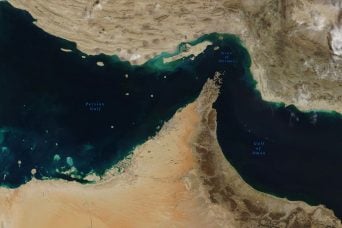
US military forces fired a missile to intercept an oil tanker in the Strait of Hormuz, escalating military tensions in a critical global energy chokepoint. The incident underscores prolonged regional instability that threatens oil supply chains and could trigger volatility in energy markets and risk assets including cryptocurrencies.
Military escalation in the Strait of Hormuz represents a critical geopolitical flashpoint with direct implications for global energy security. The US military's use of force to stop an oil tanker signals intensifying enforcement operations in one of the world's most strategically important waterways, through which approximately 20% of global oil passes daily. This action reflects broader regional tensions involving multiple state and non-state actors competing for control and influence in the Persian Gulf.
Historically, Strait of Hormuz disruptions have triggered significant market reactions. Previous incidents—from Iranian threats to close the strait to drone attacks on tankers—have caused immediate oil price spikes and broader market uncertainty. The current blockade suggests these tensions are evolving beyond isolated incidents toward sustained military operations, indicating a more prolonged period of regional instability. Rising geopolitical risk premiums have traditionally supported commodity prices while creating headwinds for risk assets.
For cryptocurrency and digital asset markets, prolonged oil market volatility and geopolitical uncertainty typically create flight-to-safety dynamics. Investors hedge against currency devaluation and inflation by diversifying into alternative stores of value, potentially supporting Bitcoin and other cryptocurrencies as macro hedges. However, risk-off sentiment during acute crises can trigger broad liquidations across alternative assets. Energy price shocks also ripple through global economic growth expectations, affecting risk appetite across all asset classes.
Monitoring developments requires attention to OPEC+ production decisions, insurance costs for tanker operations, and whether escalation spreads beyond military posturing. Sustained supply disruptions could fundamentally reshape energy markets and macroeconomic forecasts that underpin cryptocurrency valuations.
- →Strait of Hormuz military escalation threatens roughly 20% of global oil supply, creating energy market volatility.
- →Geopolitical risk premiums typically support commodities while creating uncertainty for broader risk assets.
- →Extended regional tensions could trigger flight-to-safety dynamics favoring alternative stores of value like Bitcoin.
- →Insurance and shipping costs for tanker operations will likely increase, pressuring energy prices higher.
- →Investors should monitor OPEC+ responses and escalation signals for potential macro market impacts.