
US missile strike on Marivex escalates tensions in Strait of Hormuz
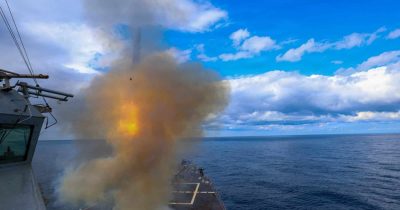
A US missile strike on Marivex has escalated geopolitical tensions in the Strait of Hormuz, a critical chokepoint for global oil commerce. The incident threatens to disrupt energy supply chains and could trigger volatility in oil markets, with downstream effects on cryptocurrency and broader financial markets sensitive to energy prices and macroeconomic stability.
The missile strike on Marivex represents a significant escalation in Strait of Hormuz tensions, one of the world's most strategically important waterways through which roughly 20% of global oil passes daily. This military action directly threatens the stability of energy markets, which remain fundamental to global economic function and cryptocurrency valuations. Geopolitical events affecting oil supply create inflationary pressures that influence central bank monetary policy, ultimately affecting risk appetite for volatile assets like cryptocurrencies.
Historically, tensions in the Strait of Hormuz have triggered sharp commodity price spikes and flight-to-safety trading patterns. Previous incidents in 2019 and 2020 saw temporary oil price surges and corresponding volatility in equity and crypto markets. The current escalation follows a pattern of increasing regional military posturing, making additional incidents more probable if diplomatic channels fail to de-escalate.
For crypto markets, geopolitical instability typically creates mixed effects: initial risk-off selling pressures emerge as investors flee volatility, but prolonged uncertainty can drive investors toward alternative assets perceived as uncorrelated to traditional markets. Energy price inflation directly impacts mining operations and blockchain network costs, particularly for proof-of-work systems. Rising oil prices also correlate with higher inflation expectations, potentially reducing real yields and supporting alternative store-of-value narratives that benefit cryptocurrencies.
Market participants should monitor oil futures and geopolitical risk indicators closely. Escalation beyond current levels could trigger sustained volatility across all risk assets, while diplomatic resolution would likely stabilize energy markets and reduce near-term crypto price pressures from macro headwinds.
- →US missile strike on Marivex escalates tensions in Strait of Hormuz, threatening 20% of global oil supply
- →Geopolitical instability in energy markets typically triggers broad macroeconomic volatility affecting cryptocurrency valuations
- →Rising oil prices from supply disruption concerns create inflationary pressures influencing monetary policy and risk appetite
- →Crypto mining operations face increased operational costs if energy prices spike from regional tensions
- →Investors should monitor oil futures and diplomatic developments as leading indicators for broader market volatility