
US Central Command confirms USS Truxtun, Rafael Peralta, and Mason in Arabian Sea after Iranian attacks
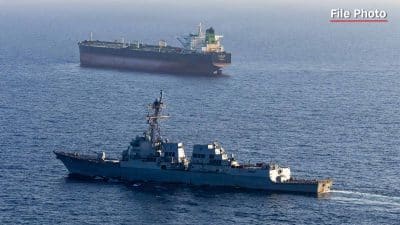
US Central Command has confirmed the deployment of three naval destroyers (USS Truxtun, Rafael Peralta, and Mason) to the Arabian Sea following Iranian attacks. The increased military presence in this critical energy corridor raises concerns about potential disruptions to regional stability and global energy markets, which could have cascading effects on cryptocurrency mining operations that depend on stable power supplies.
The deployment of US naval assets to the Arabian Sea represents an escalation in regional tensions following Iranian military action. The Arabian Sea serves as one of the world's most critical energy transit routes, with approximately one-third of global maritime petroleum trade flowing through nearby chokepoints. Any disruption to this corridor threatens global energy supply chains and price stability, factors that directly influence cryptocurrency mining economics across Asia and the Middle East.
Historically, geopolitical tensions in this region have triggered energy price volatility and shipping disruptions. The presence of three US destroyers signals heightened military readiness but also underscores the fragility of regional equilibrium. Previous conflicts and tensions in the Persian Gulf have caused oil price spikes exceeding 10-15%, which ripple through global markets and impact macroeconomic conditions affecting cryptocurrency valuations.
For the cryptocurrency industry, energy cost stability is fundamental to mining profitability. Disruptions to energy markets or shipping logistics in the Arabian Sea region could increase power costs for mining operations concentrated in the Middle East, Central Asia, and Southeast Asia. Higher energy prices compress mining margins and may shift hash rate distribution globally, particularly affecting proof-of-work networks.
Investors should monitor escalation indicators including additional military deployments, Iranian response actions, and Strait of Hormuz transit data. Sustained tensions could trigger flight-to-safety dynamics favoring Bitcoin, while acute supply shocks would likely elevate energy prices and reduce mining activity in affected regions. The situation remains fluid with potential for both de-escalation and further deterioration.
- →US naval presence in Arabian Sea increases geopolitical risk to global energy markets and cryptocurrency mining economics
- →Energy price volatility from regional instability directly impacts mining profitability across Asia and Middle East operations
- →Potential disruptions to Strait of Hormuz transit could affect one-third of global maritime petroleum trade
- →Cryptocurrency markets may experience flight-to-safety dynamics if tensions escalate further
- →Mining operations in affected regions face margin compression from rising energy costs during prolonged geopolitical stress