
US Treasury assesses options to screen investments in China biotech
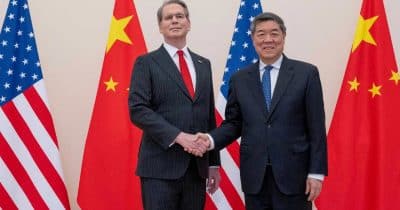
The US Treasury is evaluating mechanisms to screen and potentially restrict American investments in Chinese biotechnology companies, reflecting escalating geopolitical tensions over dual-use technologies. This regulatory shift could significantly disrupt cross-border pharmaceutical collaborations and reshape global biotech investment patterns.
The US Treasury's assessment of investment screening options in Chinese biotech represents a strategic pivot in how Washington manages capital flows related to sensitive technologies. This development stems from broader concerns that biotechnology research could have national security implications, particularly given the dual-use potential of advanced genetic research and biopharmaceutical capabilities. The initiative reflects the continuation of policies initiated under previous administrations that treated certain scientific domains as critical infrastructure requiring government oversight.
The regulatory environment surrounding US-China investment has progressively tightened over the past five years. The Committee on Foreign Investment in the United States (CFIUS) already reviews transactions involving critical technologies, but explicit biotech screening would formalize and expand this scrutiny. This shift indicates growing consensus among policymakers that innovation leadership must be balanced against national security considerations, even as it creates friction with the principle of open scientific exchange.
For the pharmaceutical and biotech industries, proposed restrictions could impede collaborative R&D projects, reduce venture capital flows to Chinese biotech firms, and potentially slow innovation cycles dependent on cross-border partnerships. Companies with significant exposure to Chinese investments or licensing agreements may face valuation pressures. Additionally, Chinese biotech firms could redirect capital flows toward domestic sources or alternative partnerships, fragmenting the global biotech ecosystem.
Market participants should monitor Treasury guidance releases and CFIUS decision patterns closely. The implementation timeline and specific thresholds for screening will determine whether this becomes a minor administrative adjustment or a significant market-moving policy shift. Industry stakeholders may also anticipate reciprocal Chinese restrictions on US investments.
- →US Treasury is evaluating formal mechanisms to screen investments in Chinese biotechnology companies for national security purposes.
- →Proposed restrictions could disrupt established US-China biotech collaborations and reshape global pharmaceutical R&D partnerships.
- →The move reflects escalating geopolitical tensions over dual-use technologies and critical infrastructure concerns.
- →Chinese biotech firms may face reduced access to American capital and could redirect investment toward domestic or alternative sources.
- →Implementation details and screening thresholds will be critical in determining the policy's market impact.