
USS Gerald R. Ford conducts flight ops in Red Sea amid rising tensions
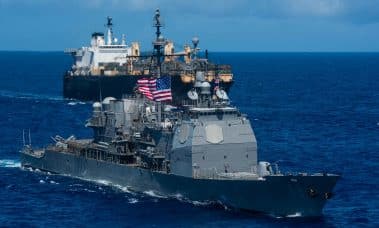
The USS Gerald R. Ford carrier strike group is conducting flight operations in the Red Sea as US military presence increases amid regional tensions. This escalation signals potential disruptions to critical global shipping lanes and could affect cryptocurrency markets sensitive to geopolitical risk and energy prices.
The deployment of the USS Gerald R. Ford to the Red Sea represents a significant escalation in US military positioning within one of the world's most strategically important waterways. This region serves as a critical chokepoint for global trade, with roughly 12% of worldwide maritime commerce passing through the Suez Canal and adjacent waters. The increased military presence suggests heightened concerns about regional stability, potentially linked to ongoing conflicts or maritime security threats that have plagued the area.
Historically, geopolitical tensions in the Red Sea have preceded crude oil price volatility and disruptions to supply chains. Previous incidents involving maritime traffic have triggered immediate reactions across commodity markets, with energy prices spiking in response to perceived supply risks. This pattern directly influences cryptocurrency markets, particularly those sensitive to macroeconomic conditions, inflation expectations, and risk-on/risk-off sentiment shifts.
For cryptocurrency investors and traders, sustained military escalation in strategic shipping lanes typically correlates with increased volatility across risk assets. Bitcoin and other cryptocurrencies often experience downward pressure during periods of geopolitical uncertainty, as investors rotate toward safer assets. However, prolonged tensions could also support alternative assets if they translate into inflation concerns or currency devaluation in affected regions.
Market participants should monitor the situation for signs of actual trade disruptions or energy price spikes. Escalation beyond military posturing could trigger sector-specific impacts, particularly affecting energy-linked assets and global equities. The cryptocurrency market's reaction will largely depend on whether this situation develops into concrete supply chain disruptions or remains containable through deterrence.
- →US military escalation in the Red Sea increases geopolitical risk and threatens critical global shipping routes.
- →Historical precedent shows Red Sea tensions typically trigger crude oil volatility and broader market uncertainty.
- →Cryptocurrency markets often experience downward pressure during geopolitical crises due to risk-off sentiment.
- →Investors should watch for actual trade disruptions rather than military positioning alone.
- →Energy price inflation resulting from supply chain disruptions could have indirect impacts on crypto asset valuations.